
Darfur: Vulnerability of the local Church in El Obeid growing amidst Sudan’s forgotten crisis
Paul Samasumo – Vatican City.
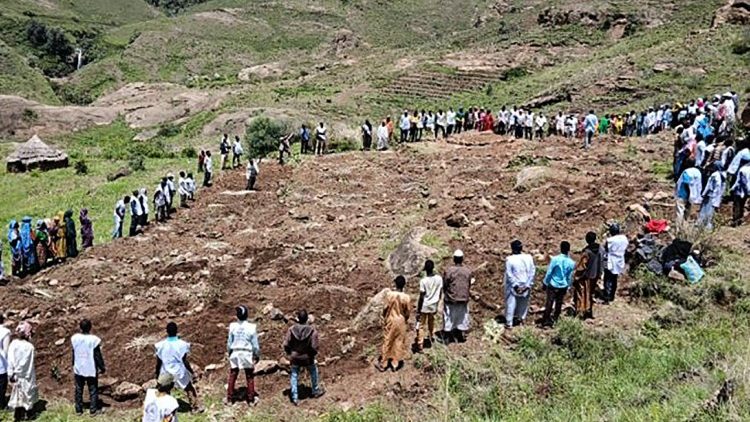
Earlier this month, Pope Leo XIV made heartfelt appeals on behalf of Sudan. He called for an end to the civil war. He urged the international community to do more to support the country amid widespread famine, cholera outbreaks, and a devastating landslide in the Darfur region. The Pope emphasised the need for humanitarian corridors and coordinated international responses to address the crisis.
Darfur: A forgotten crisis
Speaking to Vatican News, Monsignor Pierre Cibambo, President of Caritas Africa, described the conflict in Sudan—particularly in Darfur—as a “forgotten crisis.”
“I have to say that what the Holy Father said is very appropriate. His words aim to draw global attention because the crisis in Darfur can be described as a forgotten crisis. It is forgotten because not much is being done to alleviate the suffering of these people. Caritas Internationalis has been trying to alleviate the suffering. We have collected some funds that can help, but operational challenges persist, especially access issues due to security concerns,” he said.
El-Obeid, the capital of North Kordofan state, serves as a strategic hub connecting Khartoum to Darfur. According to 2023 statistics, the Diocese of El Obeid covers nearly 14 million people, with only about 0.8% identifying as Catholic.
According to Monsignor Cibambo, wherever a crisis occurs, Caritas always collaborates with local partners. However, the capacity of the Diocese of El Obeid is very limited. He said the local Church in El Obeid is “extremely vulnerable,” and struggling to operate under challenging circumstances.
Church on the Frontline
Hostilities against minority groups in Sudan’s Darfur and Kordofan states are ongoing and have been documented. The Rapid Support Forces (RSF) and the Sudanese Armed Forces (SAF) have engaged in widespread violence, displacement, and human rights abuses. International bodies, such as the UN and ICC, have condemned deliberate attacks on civilians, citing systematic sexual violence, ethnic targeting, and obstruction of humanitarian aid.
“Why is the local Church in Darfur vulnerable? Because they are on the frontline,” Monsignor Cibambo said. “They live there. They die there. And sometimes nobody even notices. This reality is truly dramatic.”
A country in ruins
While emphasising the importance of access to areas needed humanitarian assistance, Monsignor Cibambo noted that the entire country of Sudan is in crisis, not just Darfur.
Since civil war erupted in April 2023 between the two generals of Sudan’s national army and their former allies, the Rapid Support Forces (RSF), vast areas of the country have been left in ruins.
“We’re talking about Darfur, but the crisis affects all of Sudan,” the Caritas President emphasised. “In Khartoum, for example, almost nothing remains—no functioning health services, electricity, or basic infrastructure. People are living in misery. This situation underscores the urgent need for peace—and we believe peace is still possible.”
Thank you for reading our article. You can keep up-to-date by subscribing to our daily newsletter. Just click here.