Ghana’s Catholic Bishops outline pastoral priorities
Gabriel Asempa Antwi - Accra
Bishop Matthew Kwasi Gyamfi of Sunyani Diocese, and President of the GCBC, reaffirmed synodality as a central focus for the Church in Ghana. Speaking during the closing ceremony at the Cathedral of Saint Anne, he emphasized that synodality calls for deeper listening, shared responsibility, and discernment within the Church community.
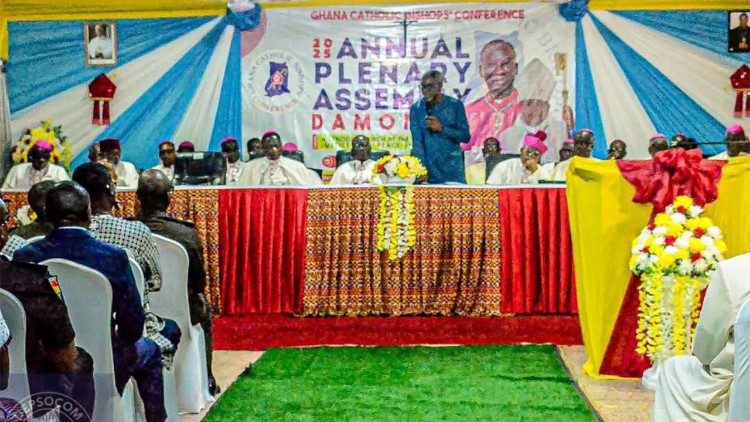
Diocese of Damongo at 30
The plenary assembly coincided with the thirtieth anniversary of the Diocese of Damongo, marking a significant milestone in its history.
Bishop Gyamfi highlighted that synodality encourages the Church to foster greater participation and unity. He urged dioceses and parishes across Ghana to strengthen existing structures such as pastoral councils, finance committees, youth councils, and presbyteral councils to enhance their effectiveness.
The Conference also emphasised the need for increased formation for clergy, religious, and laity in areas such as leadership, conflict mediation, social analysis, and Catholic Social Teaching. To this end, the Directorate for Governance, Justice and Peace (DGJP) has been tasked with collaborating with Catholic universities and seminaries to develop comprehensive synodal formation programs.
Harmful public discourse
On matters concerning the nation, Bishop Gyamfi expressed concern over the current state of public discourse. He warned that rising inflammatory and ethnocentric rhetoric threatens Ghana’s social cohesion and peace.
He drew attention to ongoing conflicts in Bawku, Gbenyiri, Kalba, Bole, and Nkwanta South, which have led to loss of life, displacement, and societal disruption. The Bishops called for sustained dialogue, reconciliation efforts, and increased collaboration among traditional leaders, government agencies, civil society, and religious groups.
Regarding political inclusivity, the Bishops urged a move away from "winner-takes-all" politics, advocating instead for leaders to prioritise the common good and respect diversity in national participation.
Education and Catholic schools
The Conference reiterated that education plays a vital role in national development and unity. Bishop Gyamfi called for the establishment of a clear partnership framework between the government and the Church to effectively manage Catholic mission schools while safeguarding their spiritual and moral integrity.
Additionally, the Bishops appealed for at least 20% of admissions in Catholic pre-tertiary schools to be reserved for Catholic children, ensuring that families within the Church have access to Catholic education and formation.
Environmental concerns and State of Emergency
The Bishops expressed grave concern over environmental degradation caused by illegal mining, commonly known as “galamsey.” Bishop Gyamfi pointed out that large areas of forest have been destroyed, rivers polluted, and ecosystems damaged due to irresponsible mining practices.
On behalf of the Conference, he called on the government to consider declaring a state of Emergency in the most affected zones, to pursue strict prosecution of offenders regardless of political affiliations, and to reclaim degraded lands. He also emphasised the importance of transparent reporting on environmental indicators and praised traditional leaders who have resisted illegal mining activities.
Thank you for reading our article. You can keep up-to-date by subscribing to our daily newsletter. Just click here.