
CAFOD at COP30: Catholic actors push for justice and climate finance
By Francesca Merlo and Linda Bordoni
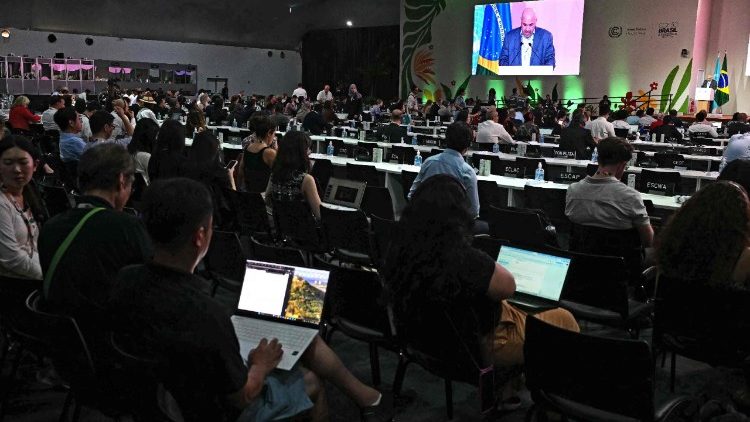
CAFOD’s Director of Advocacy and Communications, Neil Thorns, is in Belém for the COP30 UN Climate Summit, where he is participating together with a broad coalition of National Catholic Climate and Environment Actors and engaging with the Holy See delegation.
Speaking to Vatican News, he underlined the significance of coordinated Catholic engagement at this year’s Conference. “I think it’s really important that the Catholic world has a strong presence here,” he said. “The Holy See as a state party can be there intervening on the issues of climate change, which, on this 10th anniversary of Laudato si’, are really important.”
Thorns noted that Catholic actors — including cardinals and bishops — are bringing the concerns raised in Laudato si’ into negotiation spaces.
“It feels like there’s a growing body,” he added, observing that Church leaders are “taking that cry of the Earth and cry of the poor… into the corridors of power at the UNFCCC conference.”
A message of hope rooted in Laudato si’
Asked how Catholic organisations connect the Church’s ecological concerns with the diplomatic work underway at COP30, Thorns highlighted the encyclical’s capacity to motivate action.
“I think Laudato si’ brings hope. It was a real message of hope. The world is in a crisis… but we know what the solutions are, and we know with the change of heart and with the right relationships, we can change it.”
He said Catholic actors highlight both the disproportionate impact of climate change on vulnerable communities and the possibility of addressing the crisis. “They bring a critical message of concern for the poorest communities in the world… but also that message of hope that we can do something about it,” he said.
This hope, he added, serves the negotiators themselves: “People of faith use that language of faith to give hope to the negotiators, ministers and state officials… and urge them to go that extra mile.”
Impacts on the ground
CAFOD partners work across Asia, Africa, and Latin America. Thorns said the experience of the climate crisis is brought to the forum by them in different ways:
“Weather patterns are becoming more erratic… those people who may have relied on rains, you can’t rely on rains, or when they come, they are so full that it washes away crops,” he explained and cited examples of community-led adaptations supported by CAFOD, including floating gardens in Bangladesh to withstand seasonal flooding.
“It’s about building resilience for communities where there is erratic weather,” he noted, adding that CAFOD also supports communities advocating for policy change nationally and internationally.
Bringing real experiences into COP negotiations, he said, is essential:“We want to bring the voices of our partners into these central spaces… because that’s what we know is going to make a difference.”
Negotiations: slow first week, critical second week
Thorns acknowledged that delegates – as always – experience some frustration during the early sessions. “Negotiations at a COP in the first week are always frustrating… this is where the details are trying to be ironed out before the ministers arrive,” he said.
He explained that the first week is led by technical officials who negotiate within strict national positions, whereas ministers in the second week have greater flexibility.
“It’s really the second week where we need to see that movement… they need to compromise,” he pointed out, noting that this particular COP Summit is focused heavily on implementation and finance.
Climate finance and the need for creativity
Asked whether countries of the Global North may be more willing to compromise this year, Thorns pointed to the increasing visibility of climate-driven disasters worldwide.
“People are seeing that this rise in temperature is really hitting communities hard. Therefore, finance is at the centre of everything at COP,” he said.
He added that implementing national climate plans and recovering from major disasters both require significant funding, and said that CAFOD is promoting proposals that include debt relief and financial system reform:
“Debt cancellation needs to happen… because that is a way you can access money quickly and effectively. It doesn’t cost the taxpayer any money because it is releasing funds already in the system.” Public money, he said, remains essential for global public goods.
“Those countries that have caused the climate crisis do need to step up.”
Climate finance as a matter of justice
Thorns rejected the idea that vulnerable nations should appear as petitioners before wealthier ones: “It shouldn’t be a cry for help. This is an issue of justice. These communities are the ones suffering, and they have done the least to cause it.”
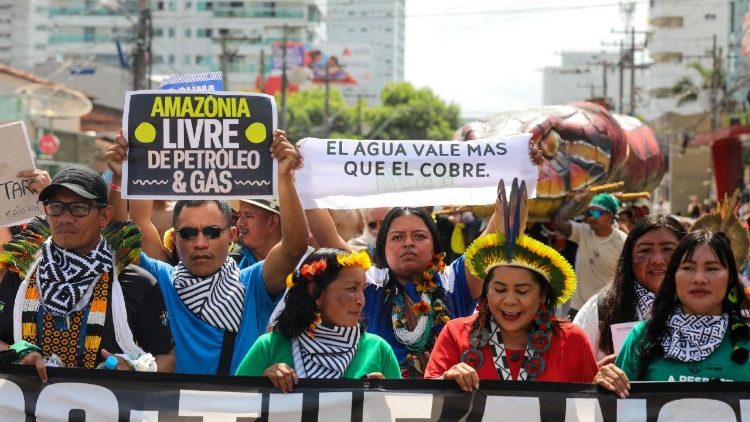
He pointed to the knowledge and leadership of Indigenous communities in the Amazon and beyond, saying, “They know the solutions. They are dealing with this problem day in and day out.”
Climate finance, he said, should follow from that understanding of justice and responsibility.

Choices and moral leadership
Thorns noted the inconsistency between the availability of funds for military spending and the difficulty of mobilising climate finance: “It’s about choices. There’s enough money in the world… If countries want to, they can do it.”
He highlighted the importance of moral leadership, referring to statements from Church leaders across continents.
Why COPs still matter
Despite slow progress and concerns about unmet commitments, Thorns stressed the need to preserve the UNFCCC process.
“The only way you are going to make progress is by dialogue… that culture of encounter.”
And multilateralism, he continued, remains essential: “None of it is perfect, none of it is making progress as urgently as we need it. But if you take it away, you have to rebuild something as precious as this, which would take years.”
Some actors with vested interests, he warned, would welcome a breakdown of the process, but he insisted, “We need people to be in the same room, having the same conversation, because that’s how we’re going to make progress.”
Thank you for reading our article. You can keep up-to-date by subscribing to our daily newsletter. Just click here.