At the heart of the Church: a former inmate reflects on historic Jubilee
By Linda Bordoni
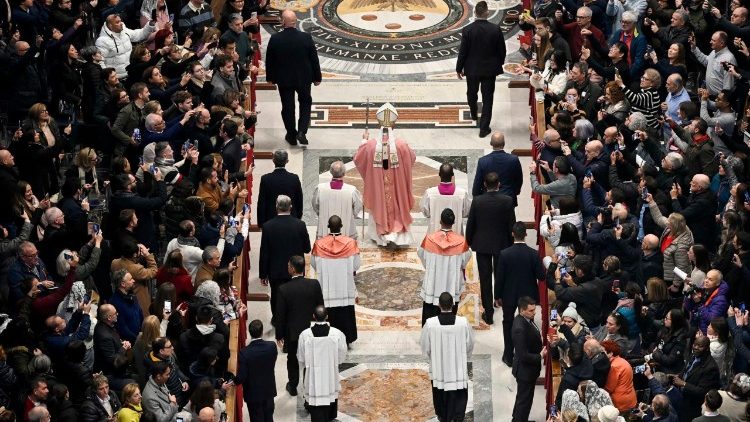
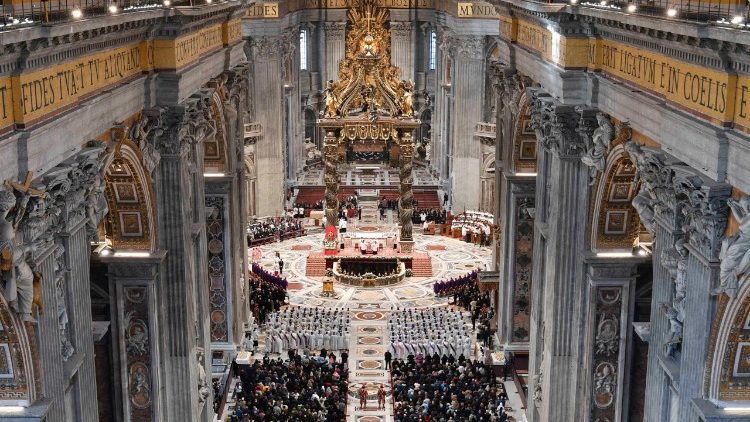
For Joshua Stancil, being in Saint Peter’s Basilica for the Jubilee of Prisoners was an experience he once would never have imagined possible.
“Sitting in a prison cell in North Carolina, it never would have occurred to me that decades later I would be here at Saint Peter’s, attending a Mass specifically geared to prisoners,” he said.
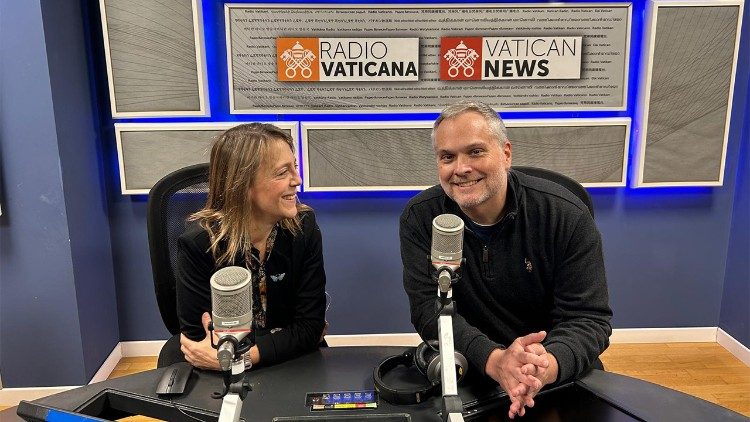
Stancil is the Creative Content Manager for the Catholic Prison Ministries Coalition in the United States and founder of Living with Convictions, which provides support and resources to men transitioning from incarceration back into society. He spent 18 years in prison before being released in 2014.
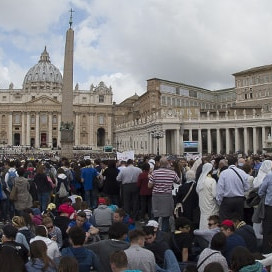
This weekend, he joined pilgrims from around the world for the first-ever Jubilee event dedicated specifically to prisoners, an inclusion he describes as both historic and deeply personal.
“Not cast off, but fully included”
The Jubilee of Prisoners, held on Gaudete Sunday, Stancil noted in an interview with Vatican News, carried a powerful message for those who have experienced incarceration. It addressed, he affirmed, a lasting wound felt by many former prisoners: the sense of being permanently marked.
“When you come out of prison, at least in America, you feel radioactive,” he explained. “As if there’s a sign on your forehead saying ‘just released from prison.’ Even if no one can see it, you feel it—and you feel that you’ll never be fully allowed back, not even in the Church.”
The Jubilee, he said, counters that perception directly.
“We’re being told not only that we are included, but that we’re included right here, in the very heart of the Church, not in some segregated space.”
The choice of Gaudete Sunday, traditionally marked by joy, Stancil noted, was especially significant.
“What could be more joyful than being told you have not been cast off, and that your new beginning is truly a new beginning?” he said.
Encounter, not programmes
Reflecting on his years in prison, Stancil noted that opportunities for spiritual growth often depend on personal encounter rather than institutional design.
“In state-run prisons, there’s a lot of scepticism about religion,” he explained. “If you experience any real spiritual growth, it’s usually because you meet someone, a volunteer, a chaplain, a priest, a religious sister, who keeps showing up.”
For him, that encounter came unexpectedly, through members of a Catholic lay movement who began visiting him regularly.
“The thing that really changes you in prison is not a programme or a project,” he said. “It’s encountering people who themselves have been changed by Christ.”
That conviction now shapes his work with the Catholic Prison Ministries Coalition, which seeks to support and expand prison ministry across the United States.
“Prison ministry is often the forgotten work of mercy,” Stancil observed, recalling Jesus’ words in Matthew 25: “I was in prison, and you visited me.”
Pope Leo XIV and moral clarity
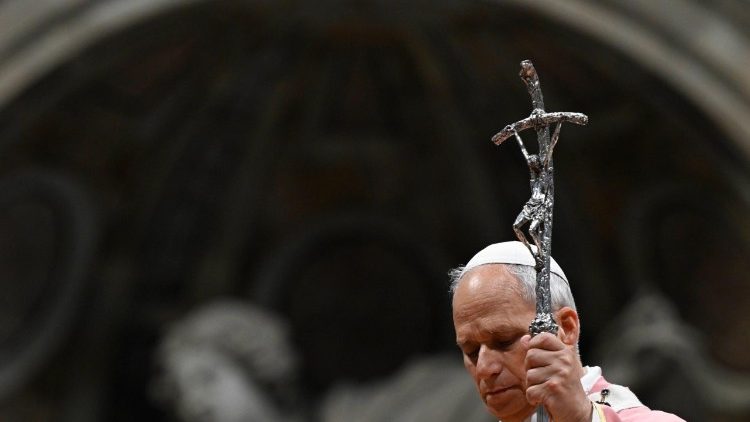
During the Jubilee Mass, Pope Leo XIV addressed both the spiritual perspective and structural problems affecting prison systems worldwide, including overcrowding and the lack of rehabilitative programmes. For Stancil, the Pope’s voice carries particular weight.
“There’s a moral clarity when he speaks,” he said. “You can tell he has thought deeply about what he’s saying.”
He added that the Pope’s American background gives his words particular resonance in the United States. “On this issue especially, Pope Leo can be a tremendous help in moving Catholics in the pews.”
Message of inclusion
Reflecting on Pope Leo’s message of inclusion, Stancil stressed that the suffering of prisoners cannot be isolated from the life of the Church as a whole.
“If one part of the Church is suffering, then in some sense the Church itself is suffering,” he said, warning that neglect, whether intentional or not, leaves lasting wounds.
To cast off those in prison, he added, is to contradict the very heart of the Gospel, since exclusion of any one group weakens the entire body and obscures the Church’s vocation to mercy, healing, and communion.
Echoing the words of Pope Leo, he reiterated that everyone can fall and everyone must be allowed to rise again.
“Casting off an entire group of people, like prisoners, is simply contrary to the Christian message,” he said.
Challenging stigma, living redemption
Despite having completed his sentence years ago, Stancil acknowledges that stigma does not disappear easily.
“I still feel it,” he said. “There’s often a sense that part of your atonement is simply staying away, that you’re never fully included anymore.”
Yet his own reintegration was marked by unconditional friendship. “No one ever asked me if I had repented enough,” he said. “Friendship was simply offered, and that changes everything.”
That same principle guides his own small non-profit organisation, Living With Convictions, which operates transitional homes in North Carolina for men re-entering society after long prison sentences.
“These are men who’ve spent decades inside,” he explained. “There’s a learned helplessness that comes from that. Even basic things, like using a smartphone, are new.”
The universality of the Church
As he returns home, Stancil says the lasting impression of the Jubilee is the Church’s universality.
“I’ve never seen so many people in my life, every race, every language, every culture,” he said. “And now, prisoners too, men and women from around the world who have fallen and are returning.”
For him, the Jubilee of Prisoners is not only a sign of hope for those behind bars or recently released, but a reminder to the entire Church.
“A message of hope to prisoners is ultimately a message of hope to everyone,” he said.
For more information on prison ministry in the United States, Stancil invites readers to visit the Catholic Prison Ministries Coalition at catholicprisonministries.org.
Thank you for reading our article. You can keep up-to-date by subscribing to our daily newsletter. Just click here.