Thailand: Compassion in the villages of Chiang Mai
By Eleanna Guglielmi
“Do not fear our littleness: sometimes listening to someone with the heart is the most profound proclamation of the Gospel,” according to Yotsaya, a missionary, as she explains one of the key aspects of the Idente mission among the Thai villages of the Karen, Lahu, Akha, Hmong, and Lisu people.
Life here depends on daily jobs and an unpredictable agricultural system. Young people leave school early, and the elderly and children are the ones who are most vulnerable to pollution, flooding, and precariousness.
In the midst of all this fragility, the presence of Catholics, a small minority in a country with a Buddhist majority, takes the form of compassion, attention, and coexistence.
A young minority Church
The proclamation of the Gospel reached northern Thailand after World War II, becoming rooted among the mountain tribal people.
Today, Catholics are still a small minority, but the Church has chosen to be missionary. Relations with other religions are not limited to official encounters, but are also lived in villages and schools, where small agricultural, healthcare, and educational projects are shared spaces that are intertwined with the family lives of people with different faiths.
The Church participates in feasts, songs, and other local traditions, choosing not to replace but rather to insert herself as a friendly presence that safeguards and strengthens social cohesion.
“We celebrate in Thai, but people reply in their languages, and the hymns transmit a spirituality that needs no translation,” explains Identes Missionary Fr. Thinnakorn.
The liturgy and catechesis are often inculturated, using local languages with attention to tribal traditions.
Many of the faithful are members of the Karen, Lahu, Akha, Hmong, and Lisu tribes, who have a strong sense of community, which is fertile soil for Christian witness. The mission enjoys a different focus in the capital city.
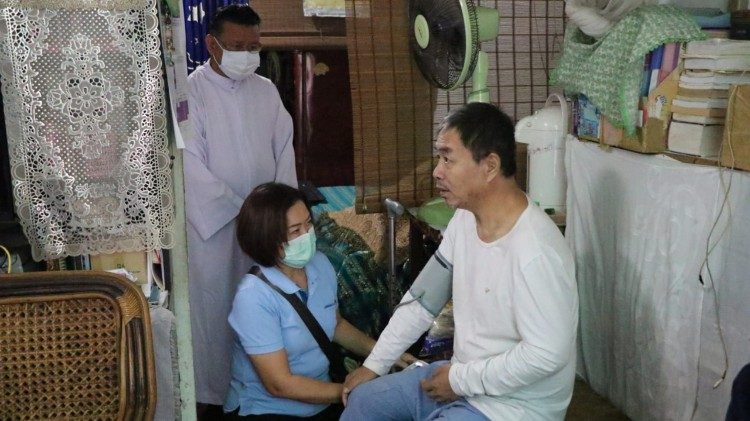
“Many young people arrive on their own, without their family and without support networks,” according to Cristina. “Their primary need is someone who listens to them.”
Sitting beside her, Esterlicia adds, “Food parcels are not enough. Offering them the opportunity to study and grow is the way to restore trust.”
Lack of a future is the real misery
Yotsaya recounts the story of “a 14-year-old girl who wanted to continue studying, but who already knew she would have to drop out early to help her family.”
This situation, said Yotsaya, “made me understand that poverty does not just mean lack of money, but also lack of opportunity and a future denied.”
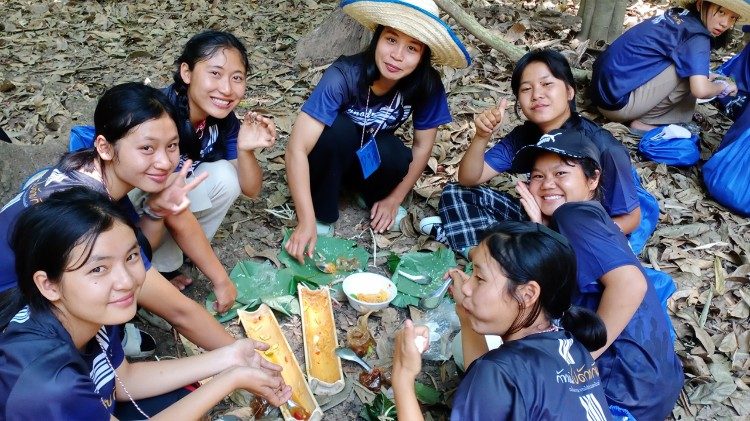
This is the real misery: to have no prospects. Children in the villages share their sweets, and neighbours support one another through challenges. Yet, precariousness remains, including occasional work, forced migrations, the young forced to drop out of school, and the elderly and children suffering from the effects of pollution and natural disasters.
Poverty here has the concrete face of impossible choices and suspended lives.
Wounds that become comfort
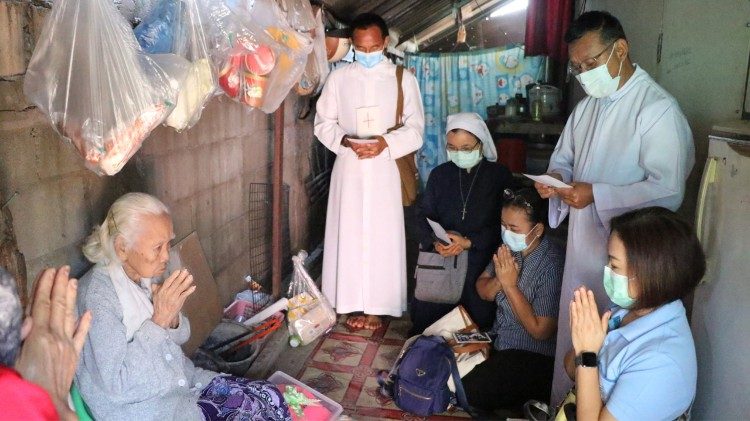
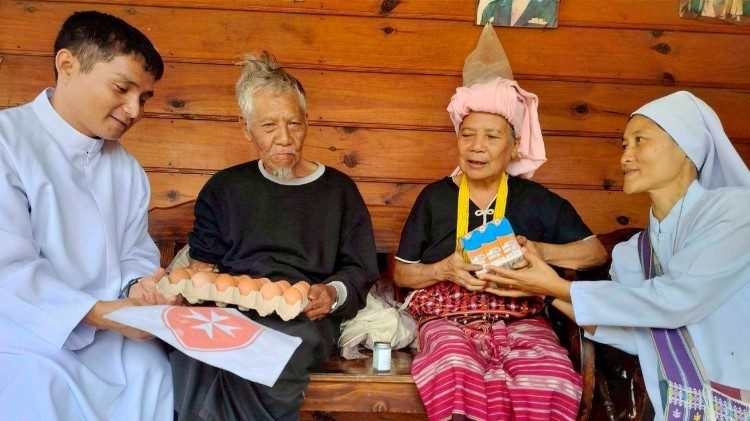
“We met an elderly couple, who had lost both their children,” recalls Esterlicia. “At first, they did not want to see anyone. Gradually, visit after visit, they began to smile.”
With similar simple gestures, missionaries draw near to people, listen, and offer loyal friendship that restores dignity and courage.
A compassionate heart
The mission in Chiang Mai is focused on relationships. Pastoral activity is intertwined with social and charitable commitment in schools, hospitals, and healthcare centres, as well as agricultural projects and development programs for hill tribes.
Special care is devoted to the poor, migrants, minors, and vulnerable people.
Interreligious dialogue is a daily and natural occurrence among Catholics, Buddhist monks, lay Muslims, and animist communities. This dialogue results in shared initiatives in favor of the environment, peace, and education.
“Living among these challenges made us understand that consecration means sharing practical life, not only by teaching, but also being near with a compassionate heart,” explain Thinnakorn and Thannoungsak.
The power of simplicity
Twenty-three years after their arrival in Chiang Mai, the Identes missionaries continue to offer their silent and steadfast presence in simplicity.
“Even small things have great value because they bear witness to God, who is always near to the little ones,” highlights Thinnakorn. “I have learned that having a meek and compassionate heart is a path to understanding God’s love and to living as brothers and sisters, [children] of the One God.”
Thank you for reading our article. You can keep up-to-date by subscribing to our daily newsletter. Just click here.