Australian bishops on economic crisis: Beyond statistics, stories of resilience
By Kielce Gussie
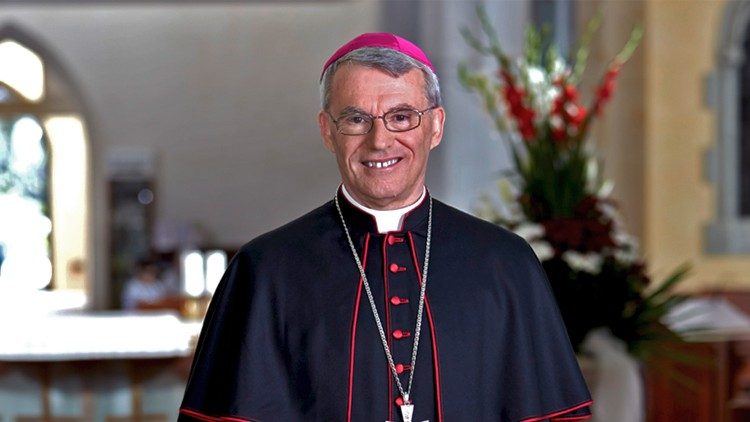
The first of two statements made by the Australian Catholic Bishops Conference (ACBC) on social justice in the country has been released. The President of the ACBC, Archbishop Timothy Costelloe, described the statement as an invitation “to reflect deeply on the challenges facing our nation and to respond with faith, hope and love.”
Throughout the nation, Archbishop Costelloe lamented, many people are struggling with the rising cost of living. “For some, this means skipping meals, delaying medical care or living without secure housing”, he noted.
But he warned against letting these people become simply numbers or statistics. Rather, we should see them as they are: “human stories of struggle and resilience.”
Build communities where no one is forgotten
The Archbishop stressed that the Gospel calls each and every one of us to accompany those who suffer, and this statement is an invitation to that mission.
The Australian bishops draw on Catholic social teaching and four of its seven principles: the dignity of every person, the common good, solidarity, subsidiarity and the preferential option for the poor. These, Archbishop Costelloe highlighted, “challenge us to share generously, to advocate for justice, and to build communities where no one is forgotten.”
The situation at hand
Over the last few years, Australia has been facing an economic crisis as people have been struggling to pay for basic goods and services in what has become known as the “cost of living crisis”. Reports name the COVID19 pandemic, wars, high interest rates, rising housing costs, wage stagnation, and excessive corporate profits as causes.
The bishops’ statement highlighted the real human cost of this crisis by looking at people’s lived experiences. One young woman from New South Wales recounted how over the last year her life has drastically changed due to the lack of funds. “There have been times when I’ve had to skip meals just to ensure that my daughter and pets could eat”, she shared, noting that she hasn’t been able to pay her electricity bills for over two years.
But this is not a singular case. A 2024 study revealed that more than 70% of employed people and those on government support said the cost of goods and services has gone up faster than people’s paychecks. As a result, people have had to dip into their savings, borrow money, go without heating and air conditioning, or avoid going to the doctor or buying medicine.
In 2025, over one in three Australian households reported “experiencing food insecurity, with many skipping meals or relying on emergency food relief.” Those living in more regional communities find it even more difficult, as one survey reported the price of basic food items in remote areas was double the price in capital cities.
All are of inestimable value
In response, the Australian bishops called attention to the Compendium of the Social Doctrine of the Church. They placed the priority on two of the principles of the Catholic Church's teaching: the universal destination of goods and the preferential option for the poor.
Yet, the bishops noted that respect for the dignity of every human person lies at the heart of all Catholic social teaching. As everyone is created in God’s image and likeness, they are of inestimable worth. The reality, however, is conflicting.
The evidence the bishops have reported in the statement reveals that the impact of rising costs of living, and it “shows that many Australians are being deprived of their human dignity.” This, they stressed, “is not acceptable.”
The principle of universal destination of goods demands that each person should have access to the necessary things in life to live with dignity. Going further, the Catholic Church’s commitment to the common good means each person should have all they need to flourish.
We all have a part to play
The bottom line is that the increasing cost of living in Australia has left many without food, medicine, or even a home. “The Church cannot ignore what is fundamentally at odds with what God intended”, the bishops argued, and they stressed they must work to make sure every individual person is not left out or left behind.
With this in mind, the Australian bishops highlighted how the first thought must go towards those who are poor or marginalized. This, they explained, “requires us to not only share what we have with people who are poor, but to also challenge what causes and entrenches poverty in society.”
In response, the bishops called on all parts of society to be involved—governments, corporations and businesses, churches and faith communities, civil society, and community organizations.
Numerous Catholic social service organizations in different dioceses across the country offer financial counselling, affordable housing, and emergency relief to some 700,000 people each year. The St. Vincent de Paul Society provide various forms of support, including $50 million in emergency relief annually.
Yet, the weight is not solely on their shoulders. The Australian bishops’ statement urged everyone from all walks of life to “play some part in working for the common good amid the cost of living crisis.”
They suggested volunteering at local Church and community organizations, donating money and goods to organizations, petitioning local politicians to help those most in need, or joining organisations promoting more affordable housing locally or nationally.
We must be prophets of hope, they argue, in a world where people struggle to make ends meet. Across the country, each person can help take steps to “lift the cloud of gloom which overwhelms so many of us today and replace it with hope for a stronger, compassionate, more resilient and fairer country.”
Thank you for reading our article. You can keep up-to-date by subscribing to our daily newsletter. Just click here.