Indonesia: One Dollar, 219 Churches
By Fr. Kasmir Nema, SVD - Jakarta
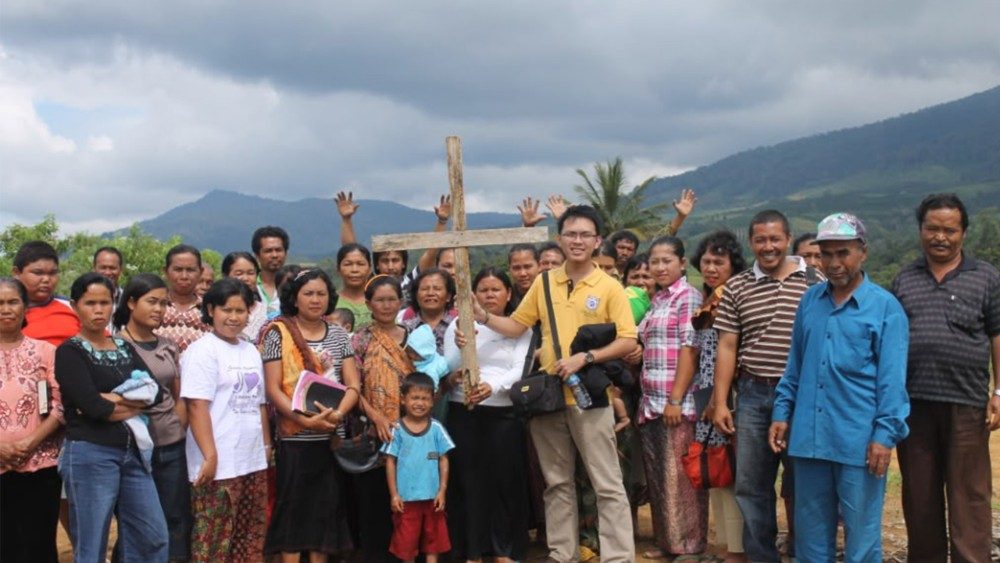
More than ten years ago, Albertus Gregory Tan, now 36, never imagined that one of the most decisive moments of his life would come in the form of a single US dollar tucked inside an ordinary envelope. Born in Jakarta on 8 April 1990, the young Catholic layman had reached the point of giving up on a mission that seemed impossible. Discouraged by limited resources and mounting obstacles, he wondered whether God was truly calling him to continue. Then came an unexpected letter.
Inside was just one dollar and a brief message of encouragement. Financially, it changed nothing. Spiritually, it changed everything.
"I felt that God was telling me, 'Keep going,'" Gregory recalls.
That small act of generosity became the spark for a movement that has since touched thousands of lives across Indonesia.
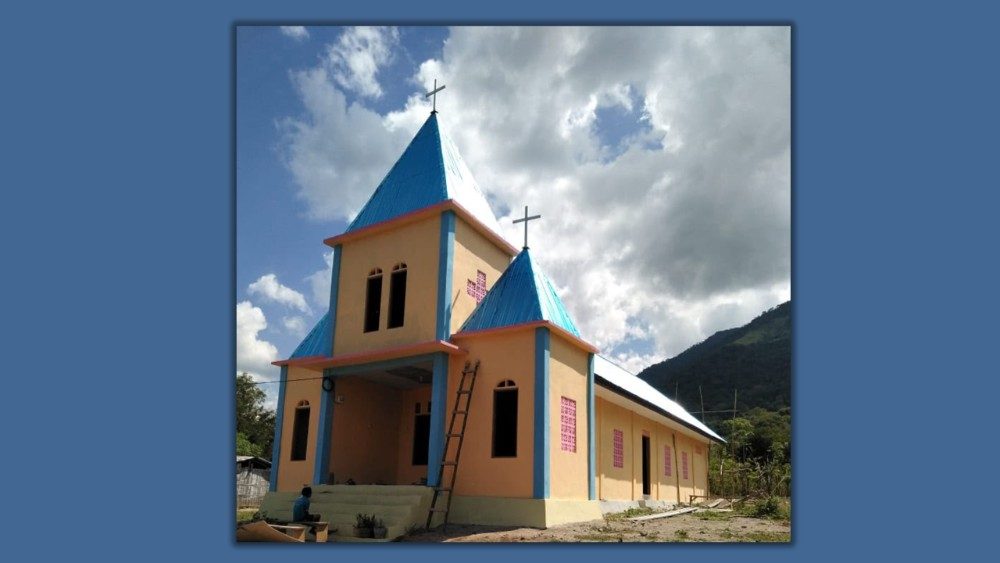
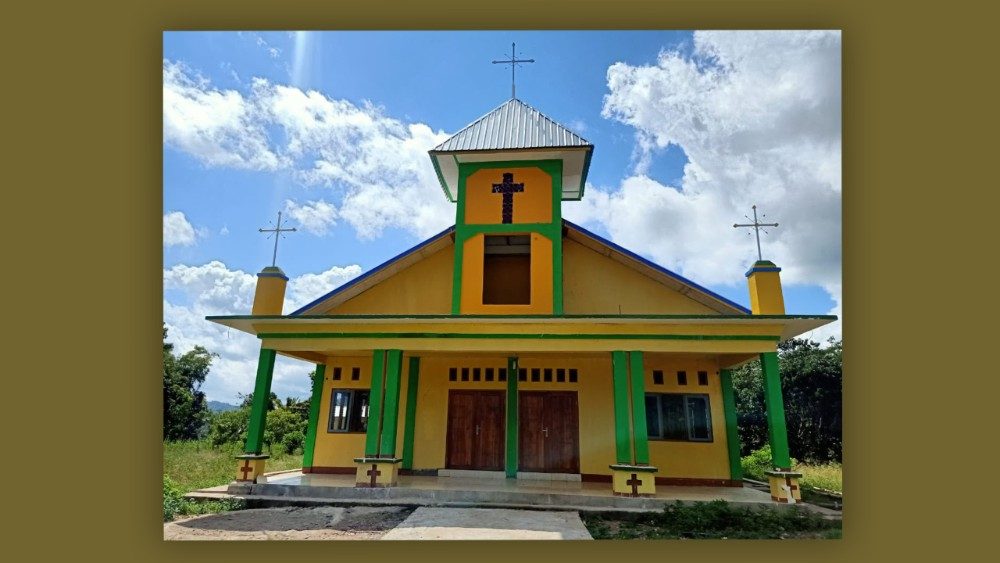
Today, the foundation he established, Vinea Dei, together with its digital crowdfunding platform Jala Kasih, has helped build 219 churches and chapels in some of the country's most remote Catholic communities. Yet Gregory insists that the greatest achievement is not measured in bricks, concrete, or impressive statistics.
"The buildings are only the visible result," he says. "The real mission is to build people—to bring hope, strengthen faith, and remind those on the margins that they are not forgotten."
Rebuilding More Than Churches
When Gregory first felt inspired to help rebuild the Church, he interpreted the call quite literally.
He thought it meant constructing church buildings in places where Catholic communities had little or no place to gather for worship. But years of traveling to remote villages gradually transformed his understanding.
"The Church is rebuilt long before the first stone is laid," he explains. "It begins when people accompany one another, share each other's burdens, and become signs of God's love."
Every construction project, he says, is also a journey of conversion. Villagers contribute whatever they can—labor, materials, food, or simply encouragement. They learn to work together, overcome differences, and rediscover the strength of their own community. By the time the church is completed, something even more important has already taken shape: a renewed sense of belonging.
Discovering Christ in the Peripheries
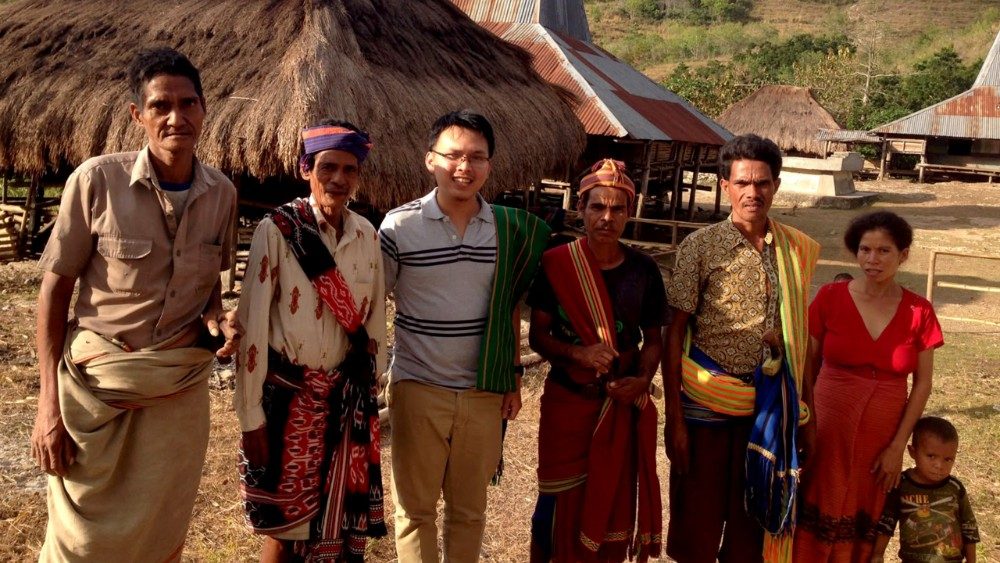
Among the many places Gregory has visited, one memory continues to shape his understanding of mission.
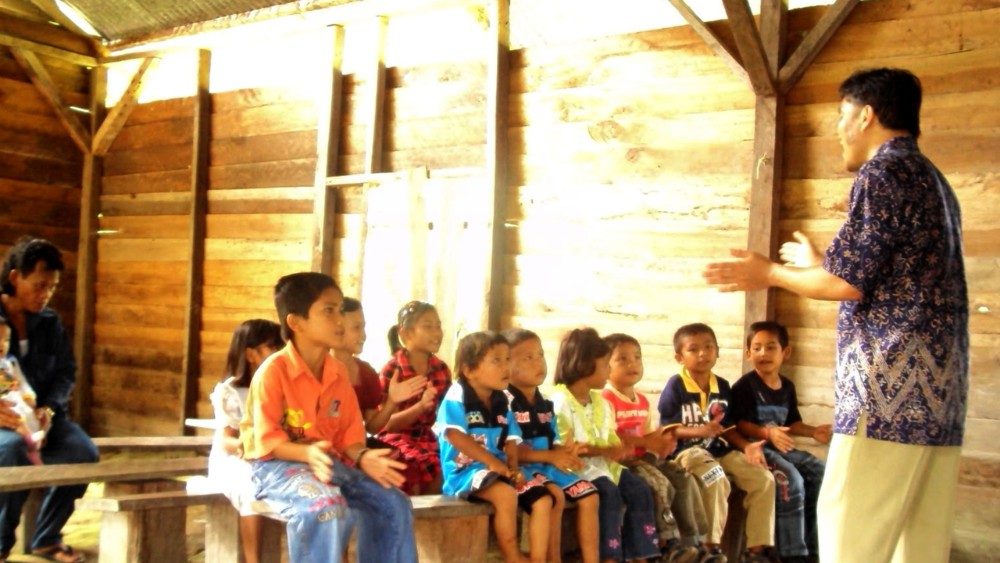
At the first church supported by Vinea Dei in the Diocese of Sibolga, he met children joyfully singing hymns despite living in deep poverty.
"They had so little," he remembers, "yet their faith was overflowing."
Their joy became a lesson he has never forgotten."They taught me that God's love does not depend on material wealth. Sometimes those who possess the least reveal the greatest faith."
Experiences like these convinced him that evangelization begins not with grand programmes but with presence—walking alongside people, listening to them, and allowing them to experience God's closeness through ordinary acts of compassion.
A Church That Speaks the Language of Its People
That same conviction has shaped the way Vinea Dei approaches church construction. Rather than imposing identical designs, the foundation encourages local communities to express their own cultural identity in sacred architecture.
One recently completed church in Flores incorporates the traditional Mbaru Niang architectural style, reflecting the heritage of the Manggarai people.
For Gregory, this is much more than an architectural choice. "When people recognize their own culture within the Church, they also recognize that Christ is already present in their history, their traditions, and their way of life," he says.
Inculturation, he believes, allows the Gospel to take deeper root because it speaks through symbols that people already understand and cherish.
Building a Synodal Church: Lay People on Mission
As the foundation matured, its mission expanded beyond church construction.
Today, Vinea Dei also provides scholarships and educational assistance for children from economically disadvantaged Catholic families, convinced that investing in young people is another way of building the future of the Church. The initiative itself is sustained almost entirely by lay Catholics.
Entrepreneurs, teachers, accountants, students, bankers, young professionals, and retirees—all contribute according to their gifts. Many have never met one another, yet they are united by a shared desire to serve.
For Gregory, this is what a synodal Church looks like in practice. "Everyone has a vocation. Everyone has something to offer. The mission of the Church belongs to all the baptized."
Begin Where You Are
Looking ahead, Gregory hopes Vinea Dei can continue reaching remote communities while also supporting seminarians whose formation is threatened by financial hardship. He also dreams that the movement may one day extend beyond Indonesia to serve the Church in other parts of the world.
Yet his final message is surprisingly simple.
It is not an appeal for donations, but an invitation.
"We are not asking everyone to support Jala Kasih," Gregory says. "Support your own parish. Help your local community. Visit someone who is lonely. Encourage those who are struggling. Begin with something small."
"God often starts great missions through very small acts of love."
Thank you for reading our article. You can keep up-to-date by subscribing to our daily newsletter. Just click here.