Pope to Spanish priests: 'Be holy and configure yourselves to Christ'
By Deborah Castellano Lubov
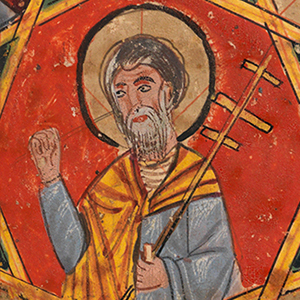
“In order to be the priests the Church needs today, I leave you with the same counsel of your holy compatriot, Saint John of Ávila: ‘Be wholly His.’ Be holy!”
Pope Leo expressed these words in a letter sent to the priests of the Archdiocese of Madrid on the occasion of the Convivium presbyteral assembly, taking place 9–10 February in the Spanish capital.
In the letter, signed on 28 January 2026, the Memorial of the Doctor of the Church Saint Thomas Aquinas, the Pope acknowledged the challenges facing priests. He suggested that amid restlessness and secularism there is an even greater need to embody holiness and to help others fill the deepest desires of their hearts with the Lord’s presence and love.
Called to candidly reflect on challenges and possibilities
The Pope began by noting that the moment the Church is living invites priests to pause together for calm and honest reflection, “not so much to remain focused on immediate diagnoses or the management of urgencies, but to learn to read deeply the moment we are called to live, recognizing, in the light of faith, both the challenges and the possibilities that the Lord opens before us.”
Along this path, he said, it becomes increasingly necessary to educate our gaze and to train ourselves in discernment, so that we may perceive more clearly what God is already doing—often in a silent and discreet way—in our midst and in our communities.
This reading of the present, the Pope underscored, cannot disregard the cultural and social framework in which faith is lived and expressed today. “In many settings,” he said, “we observe advanced processes of secularization, a growing polarization in public discourse, and a tendency to reduce the complexity of the human person by interpreting it through ideologies or partial and insufficient categories.”
Faith risks being instrumentalized or deemed irrelevant
“Within this context,” the Pope continued, “faith risks being instrumentalized, trivialized, or relegated to the realm of irrelevance, while forms of coexistence that dispense with any reference to transcendence become entrenched.”
Added to this, he noted, is “a profound cultural change that cannot be ignored,” namely “the progressive disappearance of shared points of reference.”
He recalled that for a long time the Christian seed found soil that was largely prepared, since moral language, the great questions about the meaning of life, and certain fundamental notions were at least partially shared. Lamenting the present situation, he observed that “this common substratum has been notably weakened.”
As a result, many of the basic ideas that helped people understand and pass on the Christian message for centuries are no longer obvious, and in many cases are no longer even understood.
“Now,” he said, “the Gospel encounters not only indifference, but a different cultural horizon, in which words no longer mean the same thing and where the initial proclamation cannot be taken for granted.”
A new restlessness, filled only by Christ
Yet Pope Leo said he is “convinced that in the hearts of many people, especially the young, a new restlessness is opening up today,” particularly as “the absolutization of well-being has not brought the expected happiness; freedom detached from truth has not generated the promised fulfillment; and material progress, by itself, has not managed to satisfy the deep desire of the human heart.”
All of this, he acknowledged, contributes to a growing sense of weariness and emptiness—signs that only God can fill these voids.
Men configured to Christ
Underscoring that the Lord is already at work and goes before us with His grace, the Pope reminded priests that those the Church needs today are “certainly not men defined by the multiplication of tasks or by the pressure of results,” but rather “men configured to Christ, capable of sustaining their ministry through a living relationship with Him, nourished by the Eucharist and expressed in a pastoral charity marked by the sincere gift of self.”
The Pope clarified that this "is not about inventing new models or redefining the identity we have received.”
Rather, Pope Leo explained, it is about "proposing once again, with renewed intensity, the priesthood in its most authentic core—being alter Christus—allowing Him to shape our lives, unify our hearts, and give form to a ministry lived from intimacy with God, faithful dedication to the Church, and concrete service to the people entrusted to our care.”
A priest’s entire life, he added, is meant to refer to God and to accompany others toward the Mystery, without usurping His place.
Reiterating that the Church is for everyone, the Holy Father again stressed the importance of priestly fraternity.
In this regard, the Pope insisted, “no one should feel exposed or alone in the exercise of ministry," urging them to "resist together the individualism that impoverishes the heart and weakens the mission!”
Pope Leo concluded by encouraging the Spanish priests in their ministry, urging them to adore Christ, to be men of deep prayer, and to teach their people to do the same.
Thank you for reading our article. You can keep up-to-date by subscribing to our daily newsletter. Just click here.