Pope Leo's catechesis on Second Vatican Council: 'North Star' guiding Church
By Isabella Piro
Sixty-one years after its conclusion, the Second Vatican Council continues to serve as a constant compass for the universal Church. It is with this conviction that, on 7 January, Pope Leo XIV launched a new series of reflections dedicated to the documents of the Council.
Two considerations guided his decision: the awareness that “the generation of bishops, theologians and faithful who lived through Vatican II is no longer with us”, and the need “not to extinguish the prophecy” of the Council, but rather to “continue seeking ways and means of putting its insights into practice”.
Above all, the Pope explained, it is essential to know the Council “not through hearsay or through the interpretations that have been offered of it, but by rereading its documents and reflecting on their content”.
Revisiting the 1965 texts therefore offers the Church an opportunity to “understand the changes and challenges of the modern age” and to “help build a more just and fraternal society”, while remaining with “open arms” towards humanity, its hopes and its anxieties.
Full humanity of Christ revealing the Divine Mystery
From 7 January to 6 May - excluding his break for the Lenten Spiritual Exercises and his Apostolic Journey to Africa - the Pope has so far devoted 14 reflections to two Dogmatic Constitutions: Dei Verbum on divine revelation and Lumen gentium on the Church.
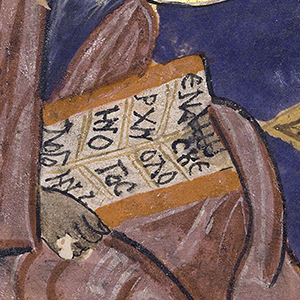
The former, which has been the focus of five catecheses, was described by Leo XIV as “one of the most beautiful and important documents of the Council”, because it reminds us that God speaks to humanity and invites it into friendship with Him.
Christ, in fact, is the human face of God, and His historical life - from the Incarnation to the Resurrection - fully reveals the Father. This is not a truth that diminishes the human person, but one that brings humanity to fulfilment: it is precisely the complete humanity of Christ that makes the divine mystery visible, since the Lord “became incarnate, was born, healed, taught, suffered, died, rose again and remains among us”.
From this flows a dynamic vision of Christianity, founded upon the unity of Scripture and Tradition, understood as a single “deposit” entrusted to the Church.
In this regard, the Pope warned against two particular dangers. On the one hand, there is the risk of a fundamentalist reading that interprets sacred texts in isolation “from the historical context in which they developed and from the literary forms employed”. On the other hand, there is the danger of overlooking the divine origin of Scripture and reducing it to “merely human teaching”, a technical or outdated text.
Pope Leo stressed instead that the Gospel must be understood as “a privileged place of encounter in which God continues to speak to the men and women of every age”. In a world saturated with empty words, the Word of God stands out as ever new, life-giving and capable of quenching the thirst of a humanity searching for meaning and truth.
Church in support of poor, exploited, and victims
Since 18 February, the Bishop of Rome has centred his catecheses on Lumen gentium, to which he has so far devoted eight reflections.
Through them, the Church emerges as an “effective sign of unity and reconciliation among peoples” and a “sanctifying presence in the midst of a humanity still fractured” by divisions and conflict.
Entrusted with the mission of “speaking clearly” in rejecting everything that demeans human life, the Church - the Pope emphasised - is called to “take a stand” in defence of the poor, the exploited, victims and all who suffer. In its eschatological dimension, moreover, it is the guardian of a hope that illuminates the journey ahead.
Witnesses to the Gospel through unity
Central, too, has been Leo XIV’s reflection on two dimensions of ecclesial life: the hierarchical and the eschatological.
The first exists to perpetuate the mission entrusted by Christ to the Apostles, provided it is never absolutised. Indeed, if ecclesial institutions are to remain fully faithful to their mission, they must strive “for continual conversion, the renewal of forms and the reform of structures”.
The second dimension - described as “essential” - invites the faithful to consider the “communal and cosmic dimension of salvation in Christ”, evaluating all things in the light of this perspective.
Laity as witnesses to justice and peace
The Pope also devoted particular attention to the laity, who are called to become ever stronger witnesses to justice and peace. Their “vast field” of apostolate must not be confined to ecclesial spaces, but should extend into the world, revealing everywhere the beauty of Christian life.
Finally, the Pope returned to the theme of holiness. Holiness, he said, is not the privilege of a select few, but the calling of all Christians through charity.
Amid the trials and persecutions of the world, the faithful are therefore encouraged to leave behind “signs of faith and love”, committing themselves to justice and living out each day their mission of conversion and witness.
Thank you for reading our article. You can keep up-to-date by subscribing to our daily newsletter. Just click here.