
Holy See reaffirms support for two-state solution and for UNRWA
By Linda Bordoni
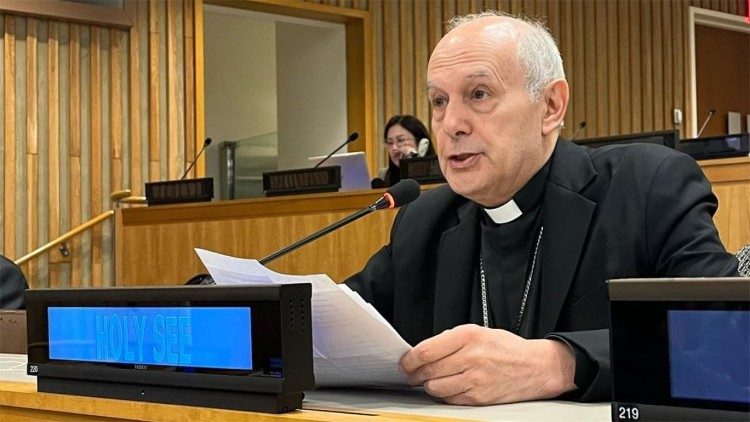
Archbishop Gabriele Caccia has reaffirmed the Holy See’s longstanding support for a two-state solution for Israel and Palestine and urged the international community to strengthen efforts toward peace, stability, and humanitarian protection in the Middle East.
Speaking during the agenda item dedicated to the United Nations Relief and Works Agency for Palestine Refugees in the Near East (UNRWA), the Holy See’s Permanent Observer to the United Nations expressed concern for the “ongoing turmoil in the Middle East,” a region “rich in faith, history and culture, yet still plagued by cycles of division and conflict.”
Renewed call for dialogue and a two-state solution
The Archbishop reiterated the Holy See’s position that “Israel and Palestine” must one day be able to “live side by side in peace and security, within internationally recognised borders,” and he pointed out that genuine and lasting progress can only be achieved "through multilateralism, patient dialogue and inclusive cooperation, not through the use of force.”
UNRWA’s indispensable humanitarian role
Highlighting more than seven decades of UNRWA’s work, Archbishop Caccia praised the Agency’s continued dedication amid mounting challenges.
Across Lebanon, Syria, Jordan, and Palestine, he noted, UNRWA “continues to provide emergency relief and comprehensive humanitarian assistance in the form of education, healthcare, food assistance and social services,” with particular attention to “children, women and the elderly,” offering “hope, protection and the possibility of a dignified life.”
The Permanent Observer conveyed the Holy See’s “sorrow and prayers for the numerous casualties among UNRWA personnel who have lost their lives in the line of duty,” and underscored the moral and legal necessity of guaranteeing humanitarian access. “Safe, sustained and unimpeded access to humanitarian assistance,” he said, “is both a moral duty and a legal obligation under international law.”
Condemnation of attacks on humanitarian facilities
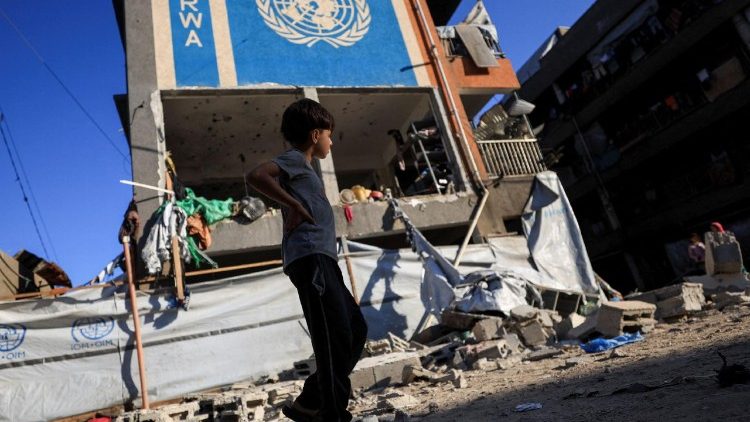
Archbishop Caccia stressed that the Holy See “deplores the attacks on UNRWA facilities, including offices, schools and hospitals,” adding that such places, together with houses of worship, “must remain inviolable spaces that provide protection and care for civilians.”
He urged all parties to respect international humanitarian law and to safeguard institutions that serve vulnerable communities.
Safeguarding UNRWA’s mandate
The Archbishop also highlighted the importance of ensuring that UNRWA’s mission remains anchored in core humanitarian principles. The Holy See, he said, considers it essential that the Agency’s work “remains firmly rooted in the principles of humanity, neutrality, impartiality and independence.”
These same principles, he added, must guide “the recruitment, administration and activities of local staff,” if the Agency is to remain “a trusted instrument of solidarity and peace.”
Supporting UNRWA, he continued, is crucial because the Agency “sustains the lives of hundreds of thousands of Palestinians who otherwise would have no other source of help.”
Thus, he said, the Holy See calls on all Member States “to renew and strengthen their political and financial support” for the Agency.
Concluding, Archbishop Caccia highlighted the need to safeguard UNRWA’s mandate. Any consideration of modifying it, he said, should occur “within the framework of the General Assembly,” ensuring that any decision reflects “the collective will and shared responsibility of all Member States.”
Thank you for reading our article. You can keep up-to-date by subscribing to our daily newsletter. Just click here.