Cardinal Parolin celebrates 60th anniversary of Holy See-Malta relations
By Tiziana Campisi
Cardinal Pietro Parolin, Vatican Secretary of State, is visiting the Republic of Malta this weekend, to commemorate the 60th anniversary of formal diplomatic relations with the Holy See.
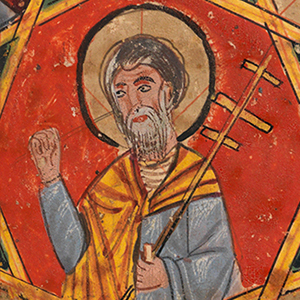
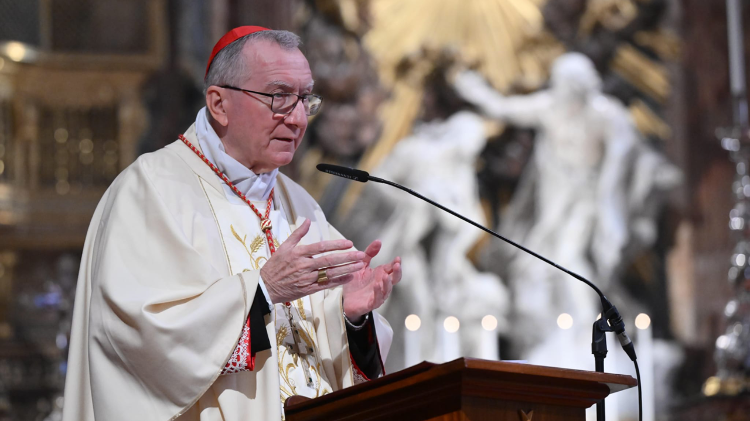
On Sunday, the Cardinal celebrated Mass in the Co-Cathedral of St. John in Valletta, as the Church marks the Feast of the Shipwreck of St. Paul on Malta.
In his homily, the Cardinal retraced what the Apostle of the Gentiles experienced on his journey to Rome.
He described St. Paul as “a prisoner, carried by forces beyond his control, tossed by the waves, subject to the decisions of others,” yet “in the midst of the storm” he was able to see things clearly, speak with authority, and encourage crew and passengers, instilling hope.
“Do not be afraid,” he said, proclaiming “a truth even deeper: that no life will be lost, because God is faithful.”
Cardinal Parolin stressed that “Saint Paul’s authority here does not derive from rank, power, or strength,” but “from his relationship with God and his sense of responsibility toward others.”
Though he was a vulnerable prisoner, he became a guide and source of strength, said the Cardinal.
The lesson for today, he added, is that “true authority—whether spiritual, pastoral, or diplomatic—is not born of control, but of reliability; not of imposing solutions, but of remaining faithful in moments of trial.”
Cardinal Parolin highlighted St. Luke’s account of Malta’s inhabitants, who showed “unusual kindness” to the shipwrecked. “The first Christian act on Maltese soil is hospitality,” he said.
From the beginning, he said, Malta’s Christian history has been marked by the capacity “to welcome the other, to transform danger into encounter and fear into relationship,” so that “Saint Paul arrives as a stranger, but leaves as a father in the faith.”

Turning to the present, Cardinal Parolin observed that “the sea that brought Saint Paul to Malta is not unlike the sea of history through which peoples and nations still sail today.”
The world, he said, is filled with “war, displacement, social fragmentation, and fear of the future,” which can tempt us “to abandon our responsibilities or to seek security through force.”
Saint Paul, said the Cardinal, shows another path by remaining attentive, listening, and speaking when necessary, reminding all that their lives matter and that they are in God’s providential hands.
“This is also the vocation of the Church in the international community,” said Cardinal Parolin. “The Holy See does not claim to calm every storm. But it seeks, with humility and perseverance, to keep alive the conviction that no one must be lost, that peace is possible, and that dialogue is never in vain.”
The Cardinal Secretary of State then recalled that diplomatic relations between Malta and the Holy See, begun sixty years ago, are the fruit “of a much older, two-thousand-year bond.”
Over time, they have shown that Church and State, when each respects the other’s autonomy, can cooperate for the common good—if done with “humility, clarity, and perseverance.”
He pointed to the Apostolic Nunciature’s “attentive and listening presence,” closely attuned to the local Church and respectful of State institutions.
He pointed to that during the period after Malta’s independence to its European integration, the Holy See helped sustain dialogue, avoid misunderstandings, and promote solutions rooted in reason, mutual respect, and goodwill.
Agreements over the years on education, marriage, ecclesiastical property, and formation, he said, should be seen not as “mere legal instruments” but as “signs of patiently built trust.”
These agreements, said the Cardinal, express a shared desire to serve society “without confusion of responsibilities,” in a relationship that is neither conflictual nor clerical, but dialogical and realistic.
Finally, Cardinal Parolin recalled the visits of the Successors of Saint Peter to Malta as “moments of grace,” when institutional ties were illuminated by affection, prayer, and shared faith.
“Malta welcomed the Successors of Saint Peter as it had welcomed Saint Paul: not with fear, but with great enthusiasm and generosity,” he said.
Cardinal Parolin concluded by upholding the primace of every human person, whom he said must never be abandoned.
Thank you for reading our article. You can keep up-to-date by subscribing to our daily newsletter. Just click here.