
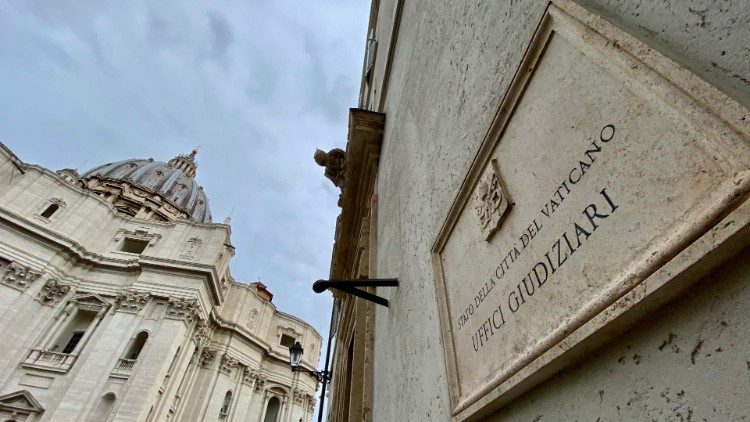
Vatican Appeal Court orders partial mistrial in Holy See funds trial
Vatican News
The Court of Appeal of Vatican City State has ordered a partial mistrial in the first-instance proceedings of the trial concerning the management of the Holy See’s financial resources, while confirming the continued legal effect of the original judgment.
In an order issued on Tuesday, under the presidency of Monsignor Alejandro Arellano Cedillo, the Court has directed the renewal of specific phases of the trial, including the re-examination of certain witnesses and evidentiary elements, and has identified procedural shortcomings that require remedy at the appellate level.
In a 16-page ruling, the court ruled that Vatican prosecutors made procedural errors that nullified the original indictment against Cardinal Angelo Becciu and the others and required a new trial.
At the same time, the Court clarified that the partial mistrial does not invalidate the entirety of the first-instance proceedings. Both the trial and the judgment retain their juridical effects, particularly with regard to defendants who were acquitted and for whom no valid appeal has been brought.
A central element of the order is the requirement to fully disclose the evidentiary record. The Office of the Promoter of Justice has been instructed to deposit, by 30 April 2026, the complete version of all acts and documents from the investigative phase, ensuring the defence's full access to previously contested materials.
The parties will have until 15 June to examine the documentation and prepare their submissions. A hearing has been scheduled for 22 June to establish the calendar for the continuation of proceedings.
The Court also addressed objections raised by the defence regarding the handling of certain papal Rescripts issued during the investigation. While reaffirming the legitimacy of such acts as an expression of the Supreme Pontiff’s authority, the Court noted that the lack of timely publication of one Rescript may have affected the validity of specific investigative measures adopted on its basis.
Conversely, arguments invoking violations of international due process standards, including those derived from the European Convention on Human Rights, were not upheld, given that such instruments are not formally incorporated into the Vatican legal system.
The decision marks a procedural development aimed at reinforcing guarantees of due process, while allowing the case to proceed within a revised evidentiary framework at the appellate stage.
Thank you for reading our article. You can keep up-to-date by subscribing to our daily newsletter. Just click here.