Holy See’s 2nd Pavilion inaugurated at Venice Biennale
Vatican News
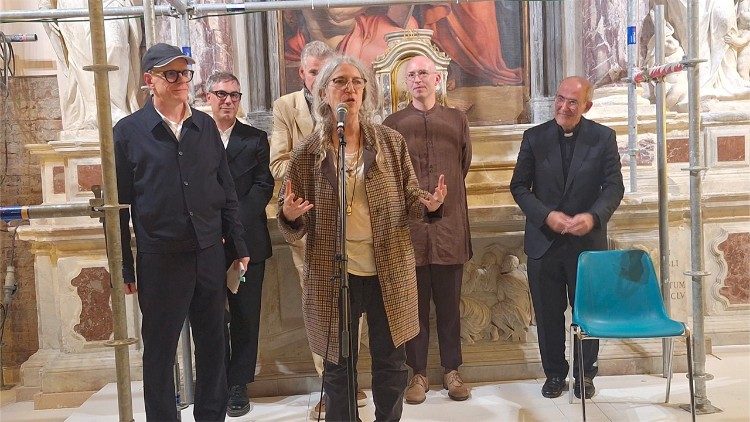
At the 61st International Art Exhibition of the Venice Biennale, the Holy See inaugurated the second venue of its pavilion in the Santa Maria Ausiliatrice complex in Venice’s Castello district.
The Holy See Pavilion unfolds across two complementary Venetian venues. The first, also inaugurated on Friday afternoon, is the hidden Carmelite garden – the “Giardino Mistico dei Carmelitani Scalzi” - in the Cannaregio district.
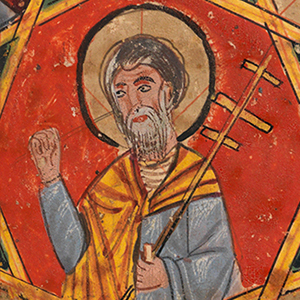
Entitled “The ear is the eye of the soul”, both venues delve into the legacy of Saint Hildegard of Bingen and invite visitors to engage in contemplation, silence and listening as pathways to spiritual and human renewal.
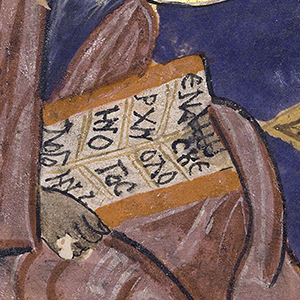
The Pavilion at the Santa Maria Ausiliatrice complex is conceived as a “contemporary scriptorium,” that explores the spiritual and cultural legacy of Saint Hildegard of Bingen through installations, living archives and works by 24 artists. The project is inspired by the late German filmmaker and thinker Alexander Kluge.
Inauguration
Among those attending the inauguration were Cardinal José Tolentino de Mendonça, the Patriarch of Venice Francesco Moraglia, Biennale president Pietrangelo Buttafuoco and Venice mayor Luigi Brugnaro.
Singer-songwriter Patti Smith also made a surprise appearance ahead of her musical performance, Sonic Prayer, created with Soundwalk Collective at the Cannaregio venue.
Cultural prophets
In his address, Cardinal Tolentino de Mendonça said the pavilion responds to today’s fast-paced and noisy society through contemplation, silence and rediscovery of listening.
Recalling the words of Pope Leo XIV — “to return to serving the rhythm of life, the harmony of creation and healing its wounds” — the cardinal said these ideas guided the Holy See’s contribution to the Biennale.
Although Hildegard of Bingen lived in the 12th century, he described her as “a very contemporary voice,” capable of shedding light on the questions and challenges of the present. He added that today’s world needs “cultural prophets” able to imagine new paths toward fraternity, spirituality and mutual benevolence.
Referring to Pope Benedict XVI’s proclamation of Hildegard as a Doctor of the Church in 2012, the cardinal recalled her conviction that all creation is an act of divine love and warned that without love the world risks becoming spiritually barren.
Harmony born from silence and listening
Patriarch Francesco Moraglia focused on the centrality of listening in Hildegard’s spirituality and in the Benedictine tradition.
Citing the opening words of the Rule of Saint Benedict — “Listen, my son, to the master’s teaching” — he said listening becomes “the privileged space of encounter with God,” who speaks not through noise but in the subtle voice of silence.
The Patriarch stressed that, in Hildegard’s vision, listening, sound, and silence reveal the deep relationship linking humanity, nature and God. In a world overwhelmed by unnecessary noise, he said, Hildegard’s message remains strikingly relevant: only those who know how to listen can truly understand, and authentic harmony is born from silence.
Fostering freedom of spirit and reflection
Biennale president Buttafuoco praised the Holy See’s pavilion for fostering freedom of spirit and reflection, while both he and Mayor Brugnaro underlined the contribution of the Holy See to promoting peace and dialogue among peoples.
Both also expressed the hope that Pope Leo XIV would visit Venice in the future.
Thank you for reading our article. You can keep up-to-date by subscribing to our daily newsletter. Just click here.