Tanzania: Church prays and hopes for reconciliation and peace
By Federico Piana
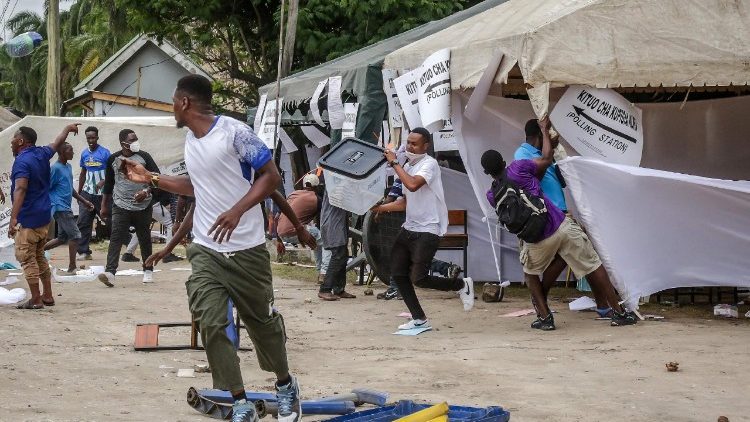
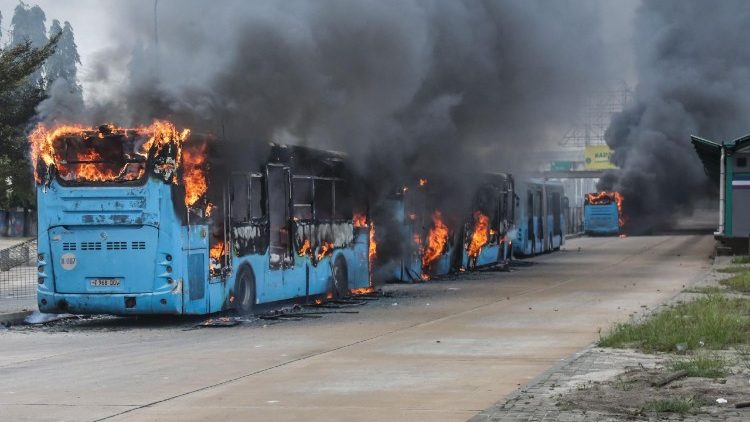
Dar es Salaam is not the only city that has earned the tragic distinction of being the most affected by the bloody street protests that, in recent days, have set all of Tanzania ablaze. Other smaller, lesser-known towns have suffered the same fate as the country’s economic capital.
They lie to the south, all within the territory of the Archdiocese of Mbeya, a region divided into nine districts primarily devoted to agriculture—worlds away from the political dynamics and party interests that have long dominated the capital, Dodoma, and its satellite cities.
Widespread dissent
Yet even here, during the days of clashes and violence, people did not stay behind closed doors. They took to the streets to voice their outrage over elections that several international observers—including members of an African Union mission—judged fell short of democratic standards.
The number of dead and wounded, as in Dodoma and Dar es Salaam, is high—too high—but still not officially recognized.
Now that the situation across the country has returned to an apparent state of normalcy, with shops reopened and public transport running again, one person in Mbeya is attempting to tally the losses.
“How many have died? Certainly more than a hundred, though that’s surely an underestimate,” Fr. Mwandanji shared with Vatican News.
Compassion and comfort
Perhaps now it will also be possible to know how many were injured and where they were taken—whether for treatment or to be hidden. Earlier, that would have been impossible.
During and immediately after the clashes between demonstrators and police—who fired live bullets at chest height to disperse the crowds—“the government had shut down all communication channels, including social media.”
Fr. Mwandanji personally searched for the wounded in various hospitals in the area: “In one, I found 18 young people; in another, the largest hospital in the region, I found 40 more—all hit by security forces. Far too many.”
An uneasy calm
According to the diocesean priest, the apparent calm Mbeya is now experiencing is nothing more than a pause before another storm—though it is uncertain when the unrest could restart.
“The majority of the population didn’t vote and disagrees with how the election was conducted. Dissent is growing because people are dissatisfied," he said.
Whether President Samia Suluhu Hassan’s post-inauguration pledge of dialogue and peace will be enough to ease tensions remains to be seen. Her declaration, however, contrasts sharply with what we hear from the capital.
Camillus Kassala, director of the Department for Peace, Justice, and the Integrity of Creation of the Tanzanian Bishops’ Conference, reports: “They have now begun arresting senior officials from the main opposition parties.”
The root causes of the protests run deep. Kassala argued they stem chiefly from the desire to change the Constitution, “which was amended in 1977 by the ruling party in a way that benefits those in power and prevents the existence of a truly multiparty democracy.”
Youth at the forefront
Those most eager for change are the young—the very ones who filled the streets. In marches and sit-ins, the average age rarely exceeded forty, and even teenagers as young as fifteen were seen shouting slogans and holding signs.
“Young people,” Kassala said, “are demanding a genuine democracy, a fair social welfare system, and greater opportunities to participate in national decision-making. They want freedom of speech and expect their elected representatives to truly reflect their concerns and aspirations.”
A Mass for the victims
The local Church wasted no time responding to the situation. As tensions escalated, it sought to mediate with the government while urging citizens to remain calm. Kassala also emphasized the importance of prayer.
“The Bishops’ Conference has asked that, in line with the Jubilee we are celebrating, all parishes and communities continue praying for the nation and its leaders, that they may truly follow God’s will.”
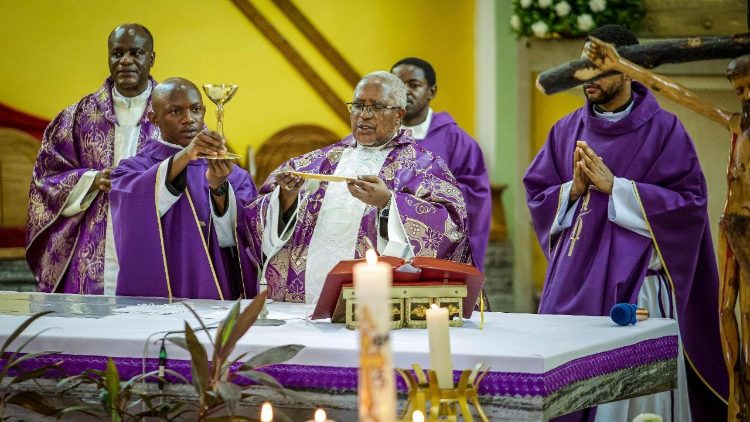
In the Archdiocese of Mbeya—now a symbol of the suffering caused by the violence—a special Mass was celebrated on Sunday, 9 November, to honor all the dead and wounded, and to implore peace, which hangs ever more by a fragile thread.
Thank you for reading our article. You can keep up-to-date by subscribing to our daily newsletter. Just click here.