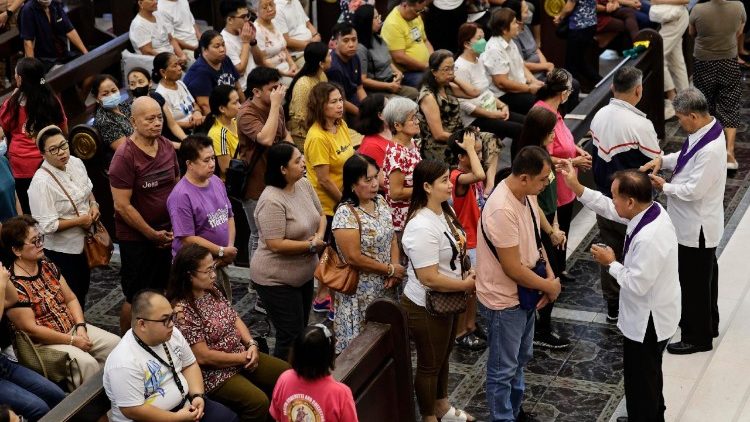
Philippine Church highlights unity as Lent, Ramadan begin together
By Fr Mark Robin Destura, RCJ
As Ramadan and Lent begin on the same day this year, Catholic and Muslim communities in the Philippines are being invited to embrace the moment as a shared season of prayer, fasting, and conversion.
Ramadan commemorates the first revelation of the Qur’an to the Prophet Muhammad, while Lent prepares Catholics for the commemoration of the passion, death, and resurrection of Jesus Christ.
Although Ramadan begins in the evening of February 17, the first full day of fasting starts on Wednesday, February 18, subject to the sighting of the crescent moon. For Catholics, the same day marks Ash Wednesday, the beginning of the Lenten journey.
In countries where Muslims and Christians live side by side, Church leaders say this convergence is a rare and meaningful coincidence, a shared sacred moment to reflect and walk together toward God, who is “Merciful and Compassionate.”
A grace-filled convergence
From southern Philippines, Bishop Jose Colin Bagaforo of Kidapawan, chairman of the Commission on Interreligious Dialogue of the Catholic Bishops’ Conference of the Philippines, highlighted the spiritual significance of this convergence.
“This shared beginning is a grace,” he said. “It invites us to slow down, to return to God and to walk together in faith.”
“In these sacred seasons, Muslims and Christians enter a time of prayer, fasting, repentance, and generosity. We turn our hearts to the Merciful. We learn again to see one another as brothers and sisters,” he added.
Reflecting on the sacred texts of both traditions, the bishop recalled:
“Our scriptures call us to peace: ‘Blessed are the peacemakers’ (Matthew 5:9) and God ‘invites all to the Home of Peace’ (Qur’an 10:25).”
Fasting, compassion, and service
Bishop Bagaforo described Ramadan and Lent as traditional seasons of prayer, repentance, fasting, and charity; moments that renew the heart and strengthen the call to live as brothers and sisters.
“Fasting opens our eyes to suffering and enlarges our compassion,” he said. “Love of God is proven in love of neighbor, especially the poor and the forgotten.”
Citing Scripture and Islamic tradition, he continued:
“As Jesus teaches, what we do for the least, we do for God (Matthew 25:40). The Prophet Muhammad, peace be upon him, likewise taught that the best among us are those who do good for others.”
Through self-discipline and generosity, he noted, believers are reminded that authentic faith is expressed in concrete acts of mercy and justice.
Peace, creation, and fraternity
The bishop also emphasized that peace must be rooted in right relationships with God, with others, and with creation.
“Peace is more than the absence of war,” he said. “It is the right relationship with God, with one another, and with creation. The cry of the earth and the cry of the poor are one.”
Caring for the environment, he explained, is therefore an essential dimension of working for peace and social harmony.
He further recalled the teaching of Pope Francis in the encyclical Fratelli Tutti, which promotes “human fraternity and social friendship” as foundations for peaceful coexistence.
“He reminds us that we are created to live together, not against one another,” Bishop Bagaforo said. “No one is meant to be excluded. No one is meant to be left behind.”
Faith expressed through “Alay Kapwa”
Drawing from the Filipino Lenten tradition of Alay Kapwa (Lentern Offering), the bishop highlighted the social dimension of prayer and sacrifice.
He explained that through this practice, “prayer becomes service, and sacrifice becomes hope for communities affected by poverty, conflict, disaster, and ecological harm.”
In this way, Lent and Ramadan become not only personal spiritual journeys, but also collective commitments to uplift the most vulnerable.
Thank you for reading our article. You can keep up-to-date by subscribing to our daily newsletter. Just click here.