
Pope’s Peace Day message emphasizes restorative approach to peacebuilding
By Krisanne Vaillancourt Murphy*
On the first day of each new year, the Catholic Church celebrates the World Day of Peace, a reminder of the deep need for peace around the globe and the priority peacebuilding should play in our efforts to uphold human dignity.
It is significant that this day comes at the beginning of the year, a time when many set new goals or make resolutions. No matter what personal goals or ambitions one might set for the year, our Church asks us to make a common commitment: to peace.
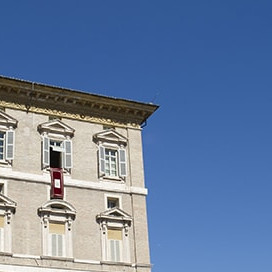
Pope Leo XIV’s statement for this 59th World Day of Peace, entitled Peace be with you all: Towards an “unarmed and disarming” peace, echoed the first words heard from the Holy Father on the balcony above St. Peter’s Square on the day he was elected to be the Successor of Peter.
Pope Leo spoke of a persevering witness that shines light, even in the darkness of violence; he affirmed that it’s not a destination, but a committed journey; he reminded us of the importance of listening and meaningful dialogue.
This is the ongoing work of peace. This is the work of restorative justice.
The Holy Father made clear this integral connection between peacebuilding and restorative practices when he said: “[W]e must promote self-awareness in civil societies, forms of responsible association, experiences of nonviolent participation, and practices of restorative justice on both a small and large scale.”
Restorative justice aligns with Catholic social teaching by recognizing that every person has inherent dignity and the right to be part of processes and systems that impact them. By offering ways to repair harm and rebuild damaged relationships, restorative justice can help people and societies heal the wounds of violence and help Catholics live out their faith.
The practices of restorative justice create opportunities for people affected by harm to understand the impacts of the harmful action—and do what is needed to make things right.
It is an approach to justice that models Jesus’ reconciling way.
Indeed, the practices of restorative justice are one concrete way to cultivate peace among us, especially in the wake of grave harm. Catholics and people of goodwill can play a role in modeling this vision of justice in our parishes, ministries, and communities—to be peacemakers here and now. In this time of deep division, isolation, and marginalization, this message and call to action are critically important.
Practicing restorative justice
Catholic communities are embracing restorative practices in a variety of ways here in the United States as an approach to transform historical injustices, respond to crime and incarceration in communities, and as a practical tool to heal wounds of division at the local and diocesan level.
Approaching harm restoratively may best be understood with real examples that come in different expressions and sizes.
In October 2025, the Franciscan Sisters of Perpetual Adoration returned land to the Lac Du Flambeau Band of Lake Superior Chippewa, a part of the Ojibwe Nation—the original caretakers of the land.
The return of the land back to the Native community came to a close two years after the sisters first approached the Tribal leaders, and after the congregation’s five-year journey to understand congregational history including the role it played in operating an Indian Boarding School. Tribal President John D. Johnson, Sr. said, “This return represents more than the restoration of land—it is the restoration of balance, dignity, and our sacred connection to the places our ancestors once walked.”
In multiple cities across the United States, the One Parish One Prisoner program uses a restorative justice model to equip parishes to build supportive pre-release relationships with an incarcerated individual who is returning to their community after prison. Over a two-year journey, a seven-person team from a parish, including the pastor, builds a relationship with an individual being released to provide holistic reentry support.
At the diocesan and local parish level, some are integrating a restorative practice called circle process for Spirit-led conversations on tough topics where participants share openly and listen deeply.
The process not only embodies the aims of synodality, it invites Catholics to address difficult topics and issues of injustice in ways that are “unarmed and disarmed,” building connection, understanding, and more peace-filled relationships.
It is this way of proceeding that our Catholic Church has been called to—especially in the past few years through the Synod on Synodality.
Both synodality and the practices of restorative justice encompass a vision and a process for journeying together amid woundedness and division. Both aim to leverage the power of deep listening, authentic dialogue, and radical truth-telling to illuminate a path toward communion and, ultimately, healing.
Pope Leo’s strong commitment to peace and synodal approaches is deeply encouraging.
Our Church, each of us, can bring restorative practices and approaches to our parishes, ministries, and communities. Our Church yearns for ways to bridge divides and strengthen bonds so that peace might be possible.
* Executive Director of Catholic Mobilizing Network
Catholic Mobilizing Network is the U.S. Catholic organization working to end the death penalty and advance the healing practices of restorative justice. You can learn more about this work at catholicsmobilizing.org.
Thank you for reading our article. You can keep up-to-date by subscribing to our daily newsletter. Just click here.