Digital Missionaries: 'Who influences the influencers?'
By Fr. Mark Robin Destura
“The goal is not simply to be present there, but to go where people are, open a path for them, and accompany them so that they may come to the Father’s house,” emphasized Monsignor Lucio Ruiz, the secretary of the Dicastery for Communication, in his introduction to the conference entitled “Digital Missionaries: What Training?”
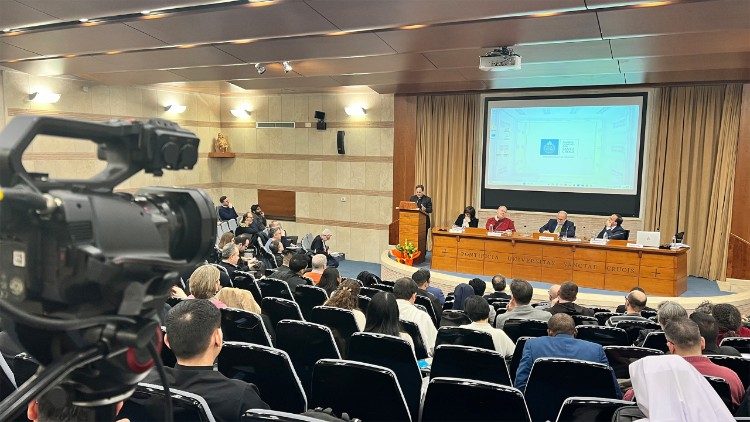
This meeting brought together scholars, communication experts, priests, and consecrated persons in Rome to examine the growing phenomenon of digital evangelization. Participants reflected on how priests, religious, and lay faithful can be better prepared to proclaim the Gospel in the digital culture that increasingly shapes human relationships and social life.
The conference took place on March 17, 2026, at the Aula Magna “Giovanni Paolo II” of the Pontifical University of the Holy Cross, drawing nearly 200 participants interested in the future of the Church’s presence in the digital environment.
The faculties of communication of four pontifical universities - the Pontifical University of the Holy Cross, the Pontifical Lateran University, the Pontifical Gregorian University, and the Salesian Pontifical University, with the collaboration of the Dicastery for Communication - organized the conference.
Pastoral training and responsibility
The first session explored the pastoral dimension of digital evangelization, emphasizing that communication is not simply a technical skill but a central element of the Church’s mission.
Professor Massimiliano Padula from the Latern University reflected on the emergence of what he called a “pastoral grassroots,” shaped by the interaction between digital culture and the lived experience of faith communities.
Drawing on communication studies, he noted that religious life in the digital environment increasingly unfolds through networks rather than rigid hierarchical structures. He said the Church must invest “in men and women of goodwill as creative agents of digital action.”
On this perspective, Professor Paolo Asolan, also from the Lateran, stressed that the formation of digital evangelists requires theological discernment rather than simple communication strategies.
“Pastoral theology is not a collection of recipes,” he said, explaining that the real task is to discern how God acts through the Church in concrete situations.
The spiritual challenge of the digital environment
The conference also addressed the spiritual challenges posed by digital culture.
Reverend Fr. Peter Lah from the Gregorian University reflected on the nature of online communication, warning that digital networks often reward superficial engagement rather than authentic dialogue.
“The digital environment is not neutral,” he said, noting that online platforms are structured around mechanisms designed to stimulate constant attention and participation.
He added that true evangelization cannot be reduced to content production or online popularity.
Instead, Professor Felipe Dominguez from the Gregorian stressed that digital missionaries must cultivate humility, reality, and interiority in their spiritual life.
“Our relationship with God comes first. We must set aside moments of silence and prayer.”
Human formation and digital influence
Another panel examined the anthropological and social implications of digital evangelization.
Research presented by Salesian University professor Maria Paola Piccini offered an empirical glimpse into the growing phenomenon of religious influencers online. The results showed that the audience of religious influencers is not limited to young users but spans several age groups.
While 74 percent considered religious influencers authentic, most followers had never met them personally, highlighting how the relationship remains largely mediated online.
Reverend Professor Fabio Pasqualetti from the Salesian University stressed the need for strong human formation among digital missionaries, noting that today’s context includes a crisis of credibility within the Church, increasing secularization, and new models of authority in digital culture.
He warned that “on digital platforms, companies make the rules, not us,” adding that evangelization must therefore prioritize witness over technique.
Intellectual formation for digital missionaries
The final sessions highlighted the importance of intellectual and theological formation for those engaged in digital evangelization.
Prof. Juan Narbona from the Holy Cross University emphasized that deep study and reflection remain essential even in a media culture dominated by short videos and rapid communication.
“Faith speaks to our reason because it gives voice to truth. Faith without reason is not authentic Christian faith,” he recalled, citing Pope Benedict XVI.
The session concluded, “Behind every effective message there is study, reflection, and intellectual preparation.”
Encouraging young digital missionaries
For those beginning to engage in evangelization online, Anastasia Pinto, one of the participants, also offered a word of encouragement, especially to young people interested in the digital mission.
“Do not be afraid. Begin where you are,” she said, explaining that success in digital evangelization should not be measured by the size of one’s audience.
“You don't require millions of people at the beginning. Even if you touch one soul and that person experiences God through your presence online, that is already a victory.”
Quoting a phrase she once heard from a digital missionary priest Fr. Rob Galea, she added, “Sometimes we are afraid to put ourselves out there — but do it scared and be faithful in what you do. God desires our availability more than our ability.”
A formation that integrates faith and culture
Concluding the conference, moderator Professor Daniel Arasa from Holy Cross University summarized the key question guiding the discussions: “Who influences the influencers?”
As the Church increasingly enters the “digital continent,” speakers emphasized that evangelization must remain grounded in authentic witness, personal encounter, and the enduring message of the Gospel.
Thank you for reading our article. You can keep up-to-date by subscribing to our daily newsletter. Just click here.