Mercy on the streets of Mexico City
By Sister Susy Vera
On the streets of Mexico City – a metropolis marked by profound contrasts – inequality, poverty, marginalization and structural violence affect wide sectors of the population. Among the many vulnerable groups who walk the streets are women who, for a variety of circumstances, have fallen into prostitution. Behind each of these women are complex stories, often marked by violence, abandonment, lack of opportunities and exclusion from an early age.
In the face of this reality, the Oblate Sisters of the Most Holy Redeemer go out into the streets each day, even at night, taking on the risks of their mission. Their task is to walk alongside, listen, accompany and offer a presence that restores dignity. Their gaze does not judge or question the past; it recognizes the person and her dignity.
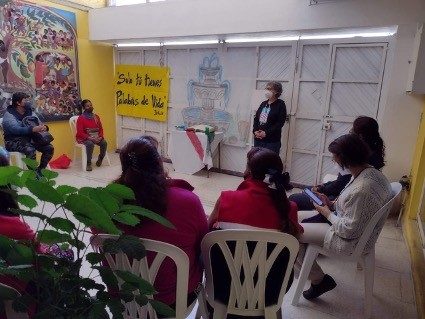
Lucía Herrerías, a missionary of the Verbum Dei Missionary Fraternity, was invited to collaborate with the Oblate Sisters in sharing the Word of God with these women.
“When they invited me to collaborate with the Oblates of the Most Holy Redeemer in the apostolate they carry out with women in situations of prostitution, I was attracted by the opportunity to share the Word of God with the poorest of the poor… With the poorest of the poor”.
Their witness confirms something essential: that even amid profoundly difficult situations, the human heart remains open to God.
“I was immediately impressed by the openness and sensitivity these women have towards the Word of God. How they capture God’s mercy and his closeness, in the midst of the very difficult situation in which they live”.
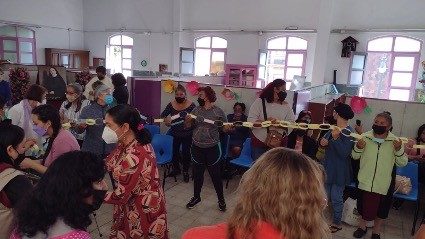
The Oblates draw close to the women in the places where they work and invite them to join activities where they can receive human formation, education, healthcare, psychological accompaniment and formation in the faith.
“Each of them is on a personal journey. Some manage to complete formation and find other ways of living. For others it is more difficult, but they always find a place of welcome and assistance in the Oblate Sisters, where they learn to discover their dignity as people and as women, and make their own decisions”.
The Word of God becomes a source of hope and inner healing in this process.
“I am impressed and uplifted to see how God speaks to them through his Word and gives them hope, as they come to feel so loved by him”.
Lucía recounts an especially significant experience that illustrates this journey.
“On one occasion, during a retreat in preparation for Christmas, I slowly read to and guided a woman who could not read. At the end, I asked her what she had seen or felt while standing before the manger in Bethlehem. She told me she had seen how the Virgin placed the Child in her arms and told her that she loved her very much”.
This experience recalls Jesus’ words affirming that prostitutes and tax collectors will precede many in the Kingdom of Heaven.
“Many have led very difficult lives from when they were young. In some cases, their own parents or grandparents had forced them to prostitute themselves as adolescents”.
Lucía also highlights the importance of language and gaze.
“I think it is important to highlight that the sisters refer to them not as prostitutes or as sex workers, but as women in a situation of prostitution. Prostitution is not something they are; it is a situation in which they are and which they can leave, though the road is long and difficult. On this journey, learning to pray and discovering how God speaks to them through his Word is a strength and an impetus to continue walking towards their freedom”.
A Church that risks looking
The joint efforts of the Oblate Sisters and Lucía Herrerías are a living witness of what it means to be a Church that goes forth, a Church that does not wait for safe spaces, but risks walking in the human peripheries, a Church that believes mercy is a concrete experience embodied in gestures, words, and gazes.
A gaze which transforms is not naïve. It does not deny the harshness of reality or romanticize suffering. It is a look that recognizes pain, but that does not remain trapped in it. It is a gaze that sees possibilities where others see only failure. It is the gaze of Jesus, who continues to walk the streets, through those who dare to see as he sees.
Today more than ever, our society needs to learn this way of seeing. It is a gaze that does not reduce people to their past, their errors, or their circumstances. It is a gaze that recognizes dignity, even in places where it appears to have been erased. It is a gaze that transforms not only those who are seen, but those who dare to see from the heart of God.
Thank you for reading our article. You can keep up-to-date by subscribing to our daily newsletter. Just click here.