Polish, German bishops recall 60th anniversary of post-World War II reconciliation
By Tomasz Zielenkiewicz & Wojciech Rogacin
In 1965, the Polish bishops addressed a message to their German counterparts. The document was written by the then-Archbishop of Wrocław, Bolesław Kominek.
Referring to the still very vivid wounds of the Second World War, the letter contained the now-historic words: “In this most Christian, but also deeply human spirit, we stretch out to you, sitting here on the benches of the closing Council, our hands, and we forgive and ask for forgiveness.”
In response, the German bishops wrote: “With brotherly respect, we grasp your outstretched hands. May the God of peace, through the intercession of the Queen of Peace, grant that the evil spirit of hatred may never again divide our hands.”
Reconciliation after World War II
This exchange constituted an unprecedented act of reconciliation between nations so profoundly divided by the war.
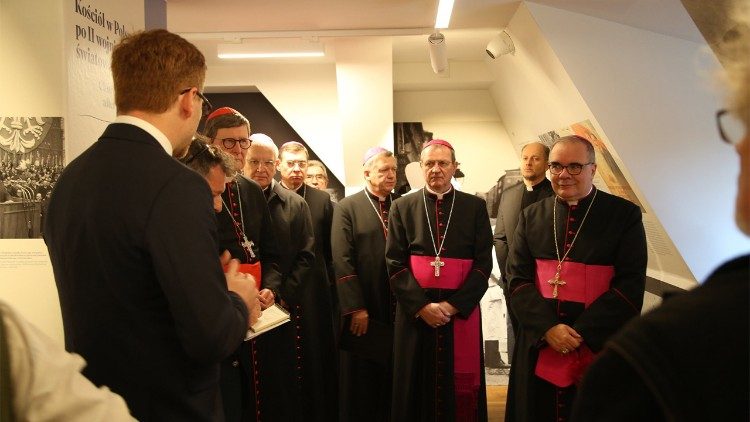
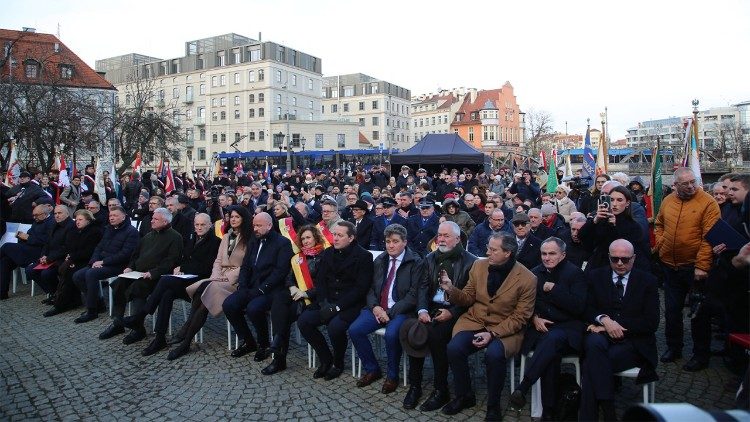
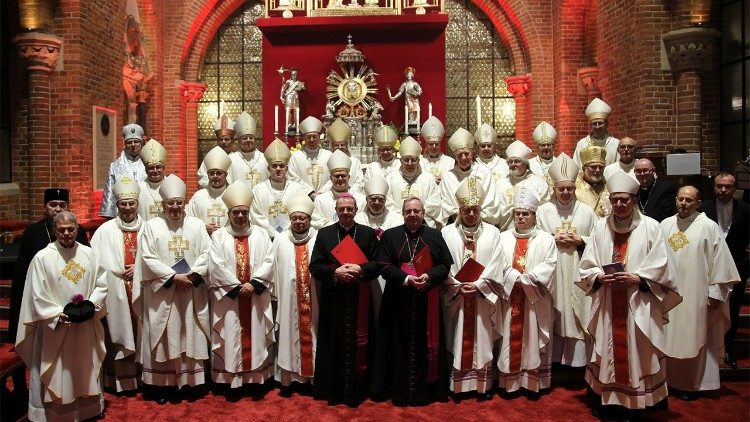
Now, Wrocław has just hosted the celebrations marking the 60th anniversary of both the Polish message and the warm, fraternal reply of the German bishops.
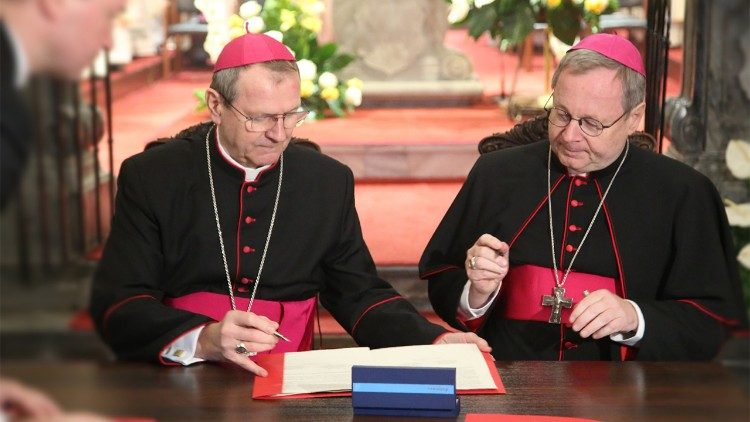
As Archbishop Tadeusz Wojda SAC, President of the Polish Bishops’ Conference, and Bishop Georg Bätzing, President of the German Bishops’ Conference, explain in their statement, the exchange of letters made clear that the Churches in Poland and Germany were not guided by the political logic of Cold War confrontation but by a desire to embark upon a shared process of transformation—a long and painful journey toward reconciliation between Poles and Germans.
Archbishop Józef Kupny, Metropolitan of Wrocław and host of the anniversary events, noted, “Meeting here sixty years later, we can see how profoundly these letters shaped the Europe that would later be united, and how they influenced its present form. The message of the Polish bishops was, in a sense, visionary—ahead of its time.”
The context of Vatican II
Archbishop Wojda recalled that the Polish bishops’ message was written in the context of the Second Vatican Council. He emphasized that the spiritual significance of the words “we forgive and ask for forgiveness” expressed the full depth of Christian spirituality, touching on the truth of sin, which wounds interpersonal and international relations.
He explained that the message acted as a balm for the still-open wounds of the war, wounds kept alive in the memory of both nations by images of crimes, destruction, deportations, and concentration camps.
"The Church of both nations dared to speak the language of the Gospel, not of politics. It dared to affirm that reconciliation is possible because God is greater than our fears, and the Holy Spirit crosses borders and walls," Archbishop Wojda said.
A shared Europe
Bishop Bätzing stressed that Poland and Germany need one another. In his view, this partnership is essential for building a Europe “that is to be for all of us a guarantor of security and peace, freedom and social justice.”
“In the past four years, Poland and Germany have stood close together, supporting Ukrainians in their defensive struggle, providing humanitarian aid, and strengthening the stability of the continent," he said. "The Church in Poland and the Church in Germany are equally needed. When we speak with one voice, we can bring an ethical dimension to public debate, grounded in the Gospel. The effectiveness of our efforts depends on our cooperation and the unity of our witness.”
Calling the 1965 message “a courageous initiative,” he emphasized that it “should be a source of renewed inspiration on the path toward deeper coexistence between our nations and our entire continent.”
'Do not reopen old wounds'
In their joint declaration marking the 60th anniversary, the bishops write that despite many achievements in Polish–German reconciliation, historical injustices continue to affect the present. Some politicians still attempt to exploit unresolved historical grievances for political purposes.
“For us, it is clear: political maneuvering based on historical wrongs is contrary to the spirit of reconciliation expressed in the exchange of letters,” Archbishop Wojda and Bishop Bätzing state.
They acknowledge that tensions remain between the two societies and must be overcome.
“Issues concerning the violent past and the acknowledgment of guilt should be discussed in a way that fosters reconciliation rather than reopening wounds. What matters is not primarily being right, but understanding our neighbor and approaching the wrongs suffered by others with empathy.”
A Polish–German example for Europe
The bishops note that Germans and Poles now bear a shared responsibility for Europe and the world. The memory of the decisive step represented by the letter exchange and ensuing reconciliation strengthens confidence in the future.
“Solidarity, compassion, perseverance, and a willingness to reconsider one’s own perspective in the light of the Gospel can serve us today as important guidance,” they write.
They warn against withdrawing into national isolation: “We must resist the temptation to follow our own national path and to abandon cooperation based on principles recognized in the international arena. The European idea—the creation of a common space of law and peace—remains essential.”
Together for Ukraine
The bishops highlight that this is especially evident in the context of Russia’s war against Ukraine.
“Europe must stand together against violence," they say. "Practical solidarity with the victims of aggression and compassion for all victims of war are indispensable.”
They note that much has already been done for Ukraine by both Poles and Germans but warn, “Now, when signs of fatigue are appearing everywhere, none of us—neither states nor societies—can withdraw from offering support.”
A program for the future: We forgive and ask for forgiveness
Both bishops affirm that the Churches in Poland and Germany will continue working to overcome hostility in Europe. This is why, in 2007, the Bishops’ Conferences of both countries supported the establishment of the Maximilian Kolbe Foundation, which serves as a platform for such engagement.
“‘We forgive and ask for forgiveness.’ This sincere and hope-filled appeal does not belong to the past. It guides us today and must remain our program for the future,” write Archbishop Wojda and Bishop Bätzing.
Thank you for reading our article. You can keep up-to-date by subscribing to our daily newsletter. Just click here.