Pope: Never instrumentalize God for military, economic, or political gain
By Deborah Castellano Lubov
"We together assume our common responsibility: to condemn every form of discrimination and persecution founded on race, religion, or origin; to reject every instrumentalization of the name of God for military, economic, or political gain; to raise our voice in favor of every minority that suffers."
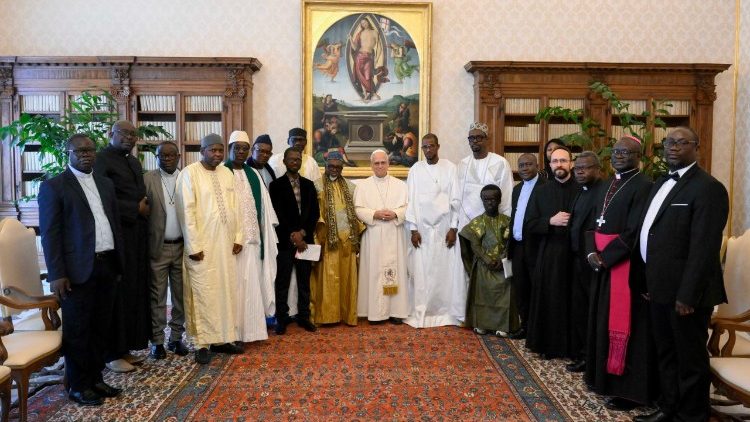
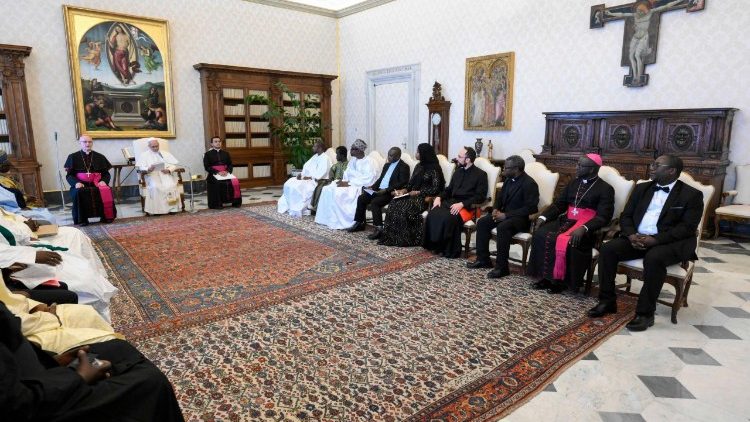
Pope Leo XIV made this statement during his encounter with representatives of Muslim communities of Senegal, alongside representatives of the Catholic Church in the country.
Safeguard your fraternity and peaceful coexistence
The Holy Father began his remarks by calling the meeting a significant expression of friendship and of a common commitment to promoting an inclusive, peaceful, and fraternal society.
He also recalled that Senegal embodies hospitality and solidarity, and demonstrates and serves as a model of peaceful coexistence among Christians, Muslims, and believers of other traditions. It is a reality, he said, that constitutes the foundation of dialogue among peoples who are different because of their religious affiliation and ethnic origin.
"This treasure of fraternity must be safeguarded with care," he said, noting it is "a precious good not only for your nation, but also for the whole of humanity."
Threats to peace in Africa
However, Pope Leo went on to lament challenges in Africa.
"Unfortunately," he said, "armed conflicts persist on the African continent, generating grave humanitarian shortages and profound inequalities that every day put entire populations to the test, without forgetting the disturbing increase in violent extremism."
Added to this, he noted, are "growing flows of migrants and refugees, hateful speech that poisons the social fabric, the weakening of the family bond, and the erosion of ethical and spiritual reference points, particularly among the young."
In this context, he said, the values embodied by the spirit of “teranga” and interreligious dialogue are "a precious instrument" for easing tensions and building lasting peace.
"By fostering interreligious dialogue and involving religious leaders in mediation and reconciliation initiatives," Pope Leo said, "politics and diplomacy can make use of moral forces capable of calming tensions, preventing radicalizations, and promoting a culture of esteem and mutual respect."
Need for diplomacy and religious dialogue founded on truth and peace
Today, Pope Leo said, the world needs diplomacy and religious dialogue founded on peace, justice, and truth.
"Together, we, Christians and Muslims," he said, "believe that every human being is shaped by the hands of God, and therefore clothed with a dignity that no law nor any human power has the right to confiscate."
The Pope therefore noted that upon this foundation of fraternity, and with faith and humanity at its roots, religions must together reject the instrumentalization of God’s name, especially for military, economic, and political gains; condemn persecution and discrimination; and protect suffering minorities.
"As I said in Bamenda in Cameroon," Pope Leo recalled, "'woe to those who manipulate religion and the very name of God for their own military, economic or political gain, dragging that which is sacred into darkness and filth.'"
Working together for the good of humanity
The Holy Father expressed his prayer that God, the Almighty, may cause the desire to understand one another better, to listen to one another, and to live together in respect and fraternity to be reborn. "May He grant you the courage to follow the path of dialogue, to respond to conflicts with gestures of fraternity, and to open your heart to others, without fearing differences."
Finally, the Holy Father prayed that their commitment in favor of peace, justice, and fraternity may bear abundant fruits, leading to ever-deeper collaboration among the different parties for the good of humanity.
Thank you for reading our article. You can keep up-to-date by subscribing to our daily newsletter. Just click here.