Pope to Villa Nazareth: May it be a forge of Christian thought
By Antonella Palermo
Eighty years ago, in the aftermath of the Second World War, Cardinal Domenico Tardini—later Secretary of State—founded Villa Nazareth as a laboratory of hope in what was then a newly urbanized area of Rome. Decades later, Villa Nazareth continues to foster a necessary dialogue between faith, culture, and charity, especially in service of the most disadvantaged young people.
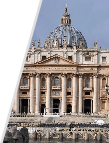
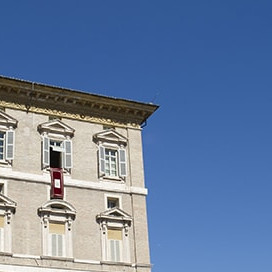
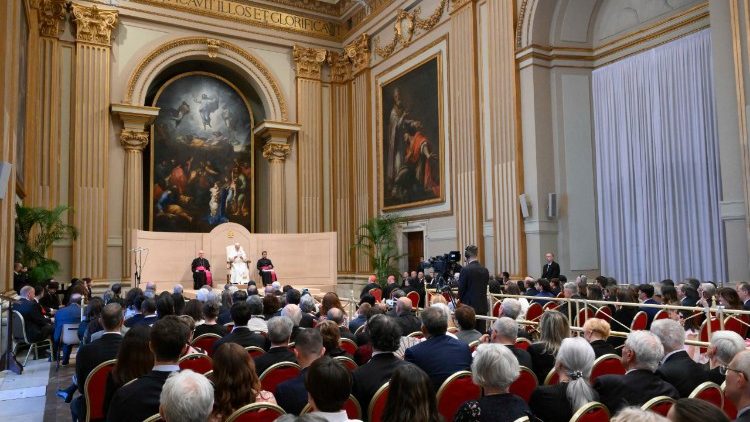
Marking its anniversary on May 30, the community celebrated a Mass presided over by Cardinal Pietro Parolin and followed by an audience with the Pope in the Hall of Blessings of the Apostolic Palace.
Educators, students, members, alumni, friends, and spiritual assistants gathered to be strengthened in their mission that is more essential than ever in today’s world. In the case of Villa Nazareth, this mission has resulted in the graduation of more than 1,300 students.
For lasting peace, forming young leaders in doing good
In his address, Pope Leo recalled the origins of Villa Nazareth, founded to offer educational opportunities to those who, “rich in talent and goodwill, lacked the means necessary to access a course of studies.”
Cardinal Parolin also highlighted this vocation in his greeting, in which he presented the community's founding values—those of the Church’s Social Doctrine. These values were subsequently deepened by a focus on gratuitousness and a simple lifestyle, in line with Cardinal Achille Silvestrini's wishes, who guided and mentored Villa Nazareth during its transition into the new millennium. Cardinal Parolin described him as a “careful guardian and modern interpreter of the original charism.”
The founder understood that, in order to promote lasting peace, it was necessary to form young people into leaders who do good, equipping them with the proper tools to live the values of the Gospel in family life, study, leisure, and professional activity.
A hearth and forge of Christian thought
The Pope also cited his recent encyclical Magnifica humanitas—“what saves the human is not enhanced self-sufficiency, but a relationship that liberates, a communion that transforms”—and he insisted on the need to build not another Tower of Babel, but the City of God, upheld by love and universal fraternity.
In his homily before the papal audience, Cardinal Parolin also spoke about the challenge of living an ever more authentic and profound communion. Having already served as an assistant to the students in the late 1990s, the Vatican Secretary of State reaffirmed on the eve of the Solemnity of the Most Holy Trinity that:
Young people need light and guidance
The Pope concluded his remarks by reviewing what his predecessors, Saint John Paul II and Pope Benedict XVI, said to the members of Villa Nazareth, recalling in particular their teaching not to become prisoners of pride or of a logic of domination, and to remain committed to an attitude of dialogue at all times—guiding principles to be followed even in our own time.
Thank you for reading our article. You can keep up-to-date by subscribing to our daily newsletter. Just click here