Cardinal Roche: St. John Henry Newman, an example of the search for truth
By Cardinal Arthur Roche*
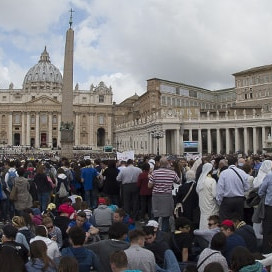
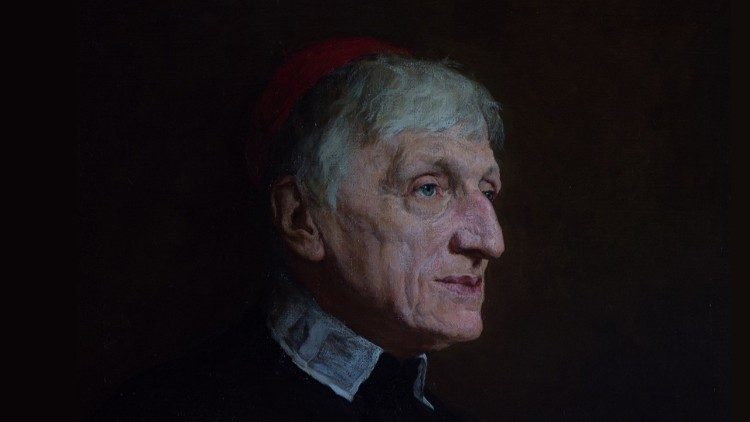
On 1 November 2025 Pope Leo XIV celebrated the Solemnity of All Saints in Saint Peter’s Square, in the presence of representatives from the world of education who had come to Rome for the Holy Year. On that occasion he proclaimed the priest, Saint John Henry Newman, as a Doctor of the Church and “together with Saint Thomas Aquinas, as co-Patron of the Church’s educational mission” (Pope Leo XIV, Homily).
The Dicastery for Divine Worship and the Discipline of the Sacraments has issued a Decree in the name of the Holy Father (Prot. N. 760/25, dated 9 November 2025, Feast of the Dedication of the Lateran Basilica) by which Saint John Henry Newman, Priest and Doctor of the Church, has been inscribed in the General Roman Calendar on 9 October, with the rank of optional memorial. Together with the Decree, the liturgical texts to be inserted into all Calendars, in the Roman Missal, in the Liturgy of the Hours and in the Roman Martyrology have been published in the Latin language. It now falls to the Episcopal Conferences to translate these texts, approve them, and, after the confirmatio/recognitio of this Dicastery, to publish the liturgical texts for this celebration, in accordance with the norms currently in force [cf. Apostolic Letter issued Motu proprio Magnum principium in AAS 109/10 (2017) 967-970; Executory Decree Postquam Summus Pontifex in Notitiæ 57 (2021) 152-222].
The inclusion of Saint John Henry Newman in the General Roman Calendar, which follows upon his proclamation as a Doctor of the Universal Church, is intended to present his figure as an outstanding example of the constant search for the truth that enlightens and saves.
During the homily of the Eucharistic Celebration in which the Rite of the Proclamation of Saint John Henry Newman took place, Pope Leo XIV recalled that “this reference to the darkness that surrounds us echoes one of Saint John Henry Newman’s best-known texts, the hymn ‘Lead, Kindly Light.’” The Holy father continued: “The task of education is precisely to offer this Kindly Light to those who might otherwise remain imprisoned by the particularly insidious shadows of pessimism and fear. For this reason, I would like to say to you: let us disarm the false reasons for resignation and powerlessness, and let us share the great reasons for hope in today’s world.” While the late Pope Francis, in the Encyclical Dilexit nos, highlighted another significant aspect of the life of Saint John Henry Newman, namely that he “took as his motto the phrase Cor ad cor loquitur, since, beyond all our thoughts and ideas, the Lord saves us by speaking to our hearts from his Sacred Heart. This realization led him, the distinguished intellectual, to recognize that his deepest encounter with himself and with the Lord came not from his reading or reflection, but from his prayerful dialogue, heart to heart, with Christ, alive and present” (n. 26)
In the liturgical texts for this celebration, the Collect reveals the very essence of the Saint’s spiritual journey: God guided him by his “kindly light” until he led him into the peace of his Church. That journey of his becomes for us too a source of inspiration and a reason for humble prayer, we who desire to be led out of shadows and appearances, so as to arrive at the full light of truth.
The choice of the readings seeks to shed light on certain characteristics of the life and person of the Saint. The first reading, taken from the Book of Sirach, presents someone who, by the will of the Lord, is filled with the spirit of understanding (cf. Sir 39: 8-14). The Responsorial Psalm (Ps 39: 2, 4ab. 7-8a. 8b-9. 10) with its refrain – Behold, I have come, Lord, to do your will – enables the assembly to express the desire to live, like the Saint, in complete docility to God’s will, even in adverse circumstances. The Gospel, preceded by the acclamation through which the assembly acknowledges and welcomes the one Father in heaven and the one Instructor, the Christ (cf. Mt 23: 9b, 10b.), is taken from the Gospel of Matthew (Mt 13: 47-52) in which the Kingdom of God is compared to a net cast into the sea that gathers all kinds of fish. Only one who becomes a disciple can understand the parable of the Kingdom, becoming “like a master of a house, who brings out of his treasure what is new and what is old”. John Henry Newman made himself a disciple in the search for the truth of God; for this reason, for the community of believers, he has become a doctor of the faith, capable of bringing forth from his treasure things new and things old, drawing from the entire treasury of Revelation, from which the wisdom of the Saints never ceases to draw
In the Liturgy of the Hours, following the hagiographical note, the second reading of the Office of Readings is taken from the Apologia pro Vita Sua, a work written by the Saint in 1864. In it, he recounts his own experience of conversion to Catholicism, likening it to a ship coming into port after a rough sea.
Lastly, the Martyrologium Romanum assigns the elogium of the saintly Doctor to the first place among the Saints commemorated on 9 October.
The inclusion of this celebration in the General Roman Calendar invites us to contemplate Saint John Henry Newman as a man led by the “kindly light” of God’s grace to find peace within the Catholic Church. His enduring contributions of profound theological and ecclesiological significance, as well as his poetic and devotional writings, continue to inspire the spiritual and intellectual journey of the faithful. His steadfast pursuit of moving beyond shadows and images to reach the fullness of truth remains a shining example for every disciple of the Risen Lord.
*Prefect of the Dicastery for Divine Worship and the Discipline of the Sacraments
Thank you for reading our article. You can keep up-to-date by subscribing to our daily newsletter. Just click here.