Tutela Minorum reaffirms guidelines, highlights emerging forms of abuse
Vatican News
The Pontifical Commission for the Protection of Minors concluded its Spring Plenary Assembly in Rome on Friday, marking five days of reflection, dialogue, and planning focused on strengthening safeguarding practices across the universal Church.
Gathering Members and staff from around the world, the Assembly centred its work on enhancing engagement with victims and survivors, advancing global safeguarding standards, and reinforcing collaboration at every level of ecclesial life.
At the opening of proceedings, participants expressed “deep gratitude to Pope Leo XIV for his leadership in reaffirming the central mission of safeguarding the dignity of every child, adolescent and vulnerable person entrusted to the Church’s care.”
A shared responsibility in challenging times
In a context marked by ongoing global conflict and its impact on the most vulnerable, the Assembly reflected on the need for renewed commitment and cooperation.
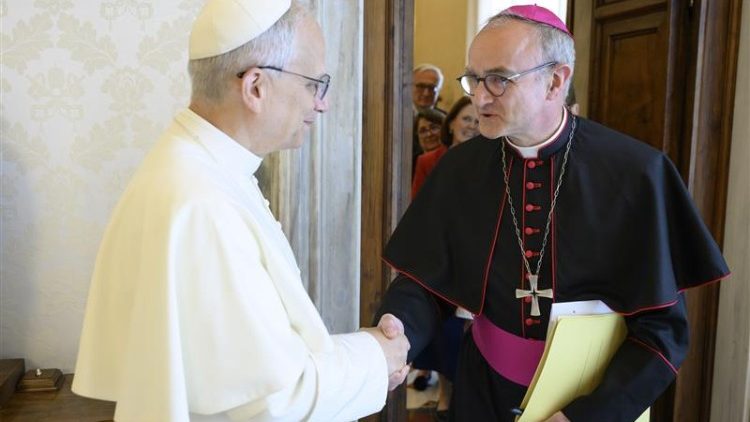
Commission President Monsignor Thibault Verny highlighted “the need for attentive listening, humility, and shared responsibility,” echoing the Pope’s encouragement to accompany local Churches as they strengthen safeguarding cultures and structures.
Contributions from experts and partner initiatives underlined both the complexity of safeguarding challenges and the importance of collaboration between Church and civil society actors. Members highlighted the urgency of fostering “an open, collaborative spirit” capable of responding effectively to these realities.
Listening to victims and survivors
A central focus of the Assembly was the role of victims and survivors in shaping the Church’s safeguarding efforts.
Members reviewed trauma-informed procedures and examined how testimony can more consistently inform policy, training, and reporting. They reiterated that engagement with victims and survivors “is not an isolated aspect of safeguarding but the central reference point for every action.”
Recent reports of abuse were acknowledged as “a painful reminder of the profound harm suffered by victims and survivors and of the grave failures that caused that harm within the Church.”
In response, the Commission affirmed its commitment “to listen, to accompany, and to help ensure that safeguarding, accountability, transparency, and care for those harmed remain at the heart of the Church’s life,” while recognising that “much still remains to be done.”
Advancing universal guidelines
Significant attention was also given to the development of the Universal Guidelines Framework, a key instrument intended to support safeguarding efforts worldwide.
Members reviewed its current phase, reflecting on how it can be made “more accessible, culturally adaptable, and spiritually rooted.” Emphasis was placed on ensuring clarity and practicality, so that the Guidelines may serve as a concrete tool for local Churches in diverse contexts.
The Commission renewed its commitment to providing guidance that is both faithful to Gospel values and aligned with professional standards, ahead of submitting the final text to the Holy Father later this year.
Expanding global initiatives
The Assembly also reviewed progress on the Memorare Initiative, which now supports 18 local Churches across several regions. The initiative continues to strengthen reporting systems, training, and safeguarding capacity through a structured model of “assessment, implementation, and evaluation.”
While challenges remain, including limited accountability mechanisms and resource constraints, Members noted positive developments, particularly in Africa and Latin America.
Accountability and accompaniment
Discussion of the Commission’s Annual Report highlighted its growing role as both “a global accountability tool and a mechanism for accompaniment.”
Insights shared by regional groups pointed to disparities in resources, gaps in data systems, and evolving legislative contexts. At the same time, the contribution of victims and survivors through focus groups was recognised as directly informing the Report’s analysis and recommendations.
This ongoing work, enriched by new partnerships and broader data collection, seeks to address concerns within various sectors of Church life and to support what the Commission described as “the consolidation of the path towards a culture of care in the local churches and consecrated life.”
Addressing emerging forms of abuse
Finally, the Assembly turned its attention to emerging challenges, including vulnerability in its many dimensions and the growing threat of online abuse.
A multidisciplinary framework presented by the Study Group on Vulnerability explores the issue in relational, cultural, and institutional contexts, offering insights for both canonical and pastoral practice.
Meanwhile, the Study Group on Online Abuse reported progress in identifying digital risks and developing practical tools for prevention and response. As highlighted during the Assembly, “digital safeguarding must be an urgent priority given the scale of online abuse of children and persons in vulnerable situations globally.”
Thank you for reading our article. You can keep up-to-date by subscribing to our daily newsletter. Just click here.