Cardinal Czerny: ‘Magnifica humanitas’ is profoundly synodal
Vatican News
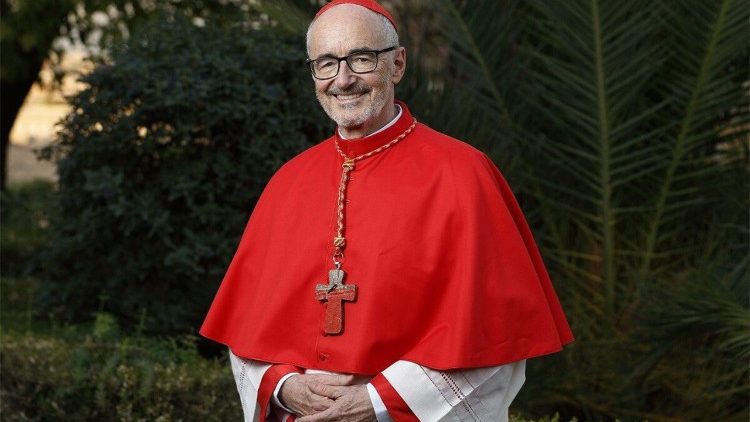
Cardinal Michael Czerny, Prefect of the Dicastery for Promoting Integral Human Development, sent a video message on 1 June to the bishops of Switzerland as they gathered for their plenary assembly at Einsiedeln Abbey.
The Canadian Cardinal had been expected to attend in person, but commitments in the Vatican prevented him from travelling. Those commitments, the Jesuit Cardinal explained at the beginning of his message, were “connected with the work of the Commission on Artificial Intelligence, as well as the follow-up to the recent publication of the Encyclical Magnifica humanitas.”
His message to the Swiss bishops focused on the significance of Pope Leo XIV’s Encyclical, published on 25 May. Cardinal Czerny also reflected on the Pontifical Commission recently established by the Holy Father to coordinate work related to artificial intelligence and entrusted to the Dicastery’s leadership.
“From the outset,” he said, “one essential question presents itself to us: how can this new Commission enter into dialogue with the local Churches, accompany them, and support them in addressing the challenges—and the discernment—that artificial intelligence raises today?”
An Encyclical that helps discern contemporary challenges
“One of the greatest lessons Pope Francis taught me was this: ‘Do not be afraid of reality,’” Cardinal Czerny continued, noting that over time he had come to understand “how strongly we can all be tempted—myself included, as well as many others in the Church—to shield ourselves from reality, or at times to distance ourselves from it in various ways.”
The publication of Magnifica humanitas, he said, seeks precisely to engage with reality.
“By forcefully reaffirming the great foundations and principles of the Church’s social doctrine, this Encyclical helps us to recognize, understand, interpret, discern, and ultimately confront the many challenges—not only those linked to artificial intelligence—that threaten our humanity or, in the words of our Dicastery, constitute serious obstacles to integral human development.”
Living a synodality directed outward
The publication of the Encyclical, Cardinal Czerny continued, invites the Church to “live a synodality directed outward.”
“It is not a synodality focused solely on the Church’s internal questions, but a path that calls us to walk alongside others, with courage and hope, without turning away from the sometimes troubling realities of today and tomorrow.”
“This is what makes Magnifica humanitas so profoundly synodal,” he said, “because it is inclusive and welcomes everyone: ‘No one can bear alone the weight of the challenges facing the world, just as no one is too weak to play his or her part’ (n. 13).”
The Prefect of the Dicastery for Promoting Integral Human Development also reflected on the Swiss model of governance.
“You have the grace of benefiting from a system of direct democracy that involves citizens in questions far more fundamental than is possible in many other countries. In the present circumstances, is the Church not called to make a particular contribution to the good governance of your country and its various institutions?” he asked.
Invitation to a genuine examination of conscience
Cardinal Czerny also explained the subtitle of the Encyclical—on the safeguarding of the human person in the age of artificial intelligence.
“Here we recognize profound needs for evangelization, pastoral accompaniment, reconciliation, and participation in the life of the Church in all its concrete—and one might say ‘traditional’—forms,” he noted.
“Magnifica humanitas also invites us bishops, priests, and pastoral workers to undertake a genuine examination of conscience,” the Cardinal continued.
“These questions,” he concluded, “must also be applied to ourselves: to our structures, to our ways of operating, and to the manner in which we, as the Church, journey through history alongside the other realities of this world. For this too is an essential way of evangelizing.”
Thank you for reading our article. You can keep up-to-date by subscribing to our daily newsletter. Just click here.