
Children in Darfur on the brink between abandonment and hope
By Pierfrancesco Loreto
It can take days of negotiations and several permissions to reach just one child in Sudan's Darfur region after driving through sandy roads in a volatile environment, UNICEF warned.
Addressing journalists following a 10-day deployment to the area, Eva Hinds, the UN child agency’s Chief of Communications, described a meticulous and delicate humanitarian action.
”What I witnessed was unlike anything before. The scale of displacement, the fragmentation of the conflict, and the collapse of essential services have created a situation where every child is living on the brink,” she said.
Warring parties have been fighting for control of the country for almost three years.
As a result, since April 2023 Sudan has been plunged into a devastating civil conflict, which is also impacting neighbouring countries.
The conflict between the Sudanese Armed Forces (SAF) and the Rapid Support Forces (RSF) has killed over 150,000 people, displaced 10 million, and sparked catastrophic food scarcity.
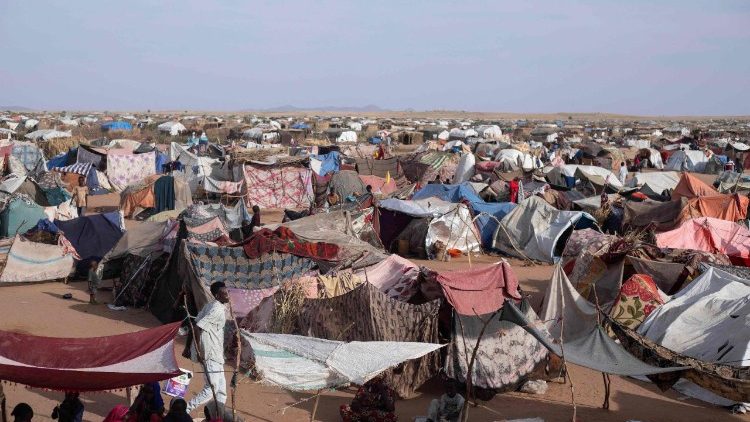
Despite years of experience dealing with emergencies, Ms. Hinds was flabbergasted by the gravity of the situation in Tawila, where people have built a whole city from sticks, hay, and plastic sheeting.
“It felt like an entire city uprooted and rebuilt out of necessity, fear and desperation,” she noted.
Between 500,000 and 600,000 people are taking refuge there, and “standing inside that vast expanse of makeshift shelters was overwhelming,” she added.
“The world's largest humanitarian emergency“
Amid these conditions, the UN official noted that in just two weeks, UNICEF and its partners vaccinated over 140,000 children and treated thousands for illness and malnourishment.
They also restored potable water, established temporary educational facilities, and supplied food and emotional support.
“It is painstaking, precarious work—delivered one convoy, one clinic, one classroom at a time—but for children in Darfur, it is the thin line between being abandoned and being reached.”
At a centre for women and girls, mothers shared their hardships: a lack of food, blankets, or warm clothes for their children. “The children are freezing,” one mother told her. “We have nothing to cover them with.”
Reflecting on what she witnessed, Ms. Hinds stressed that “Sudan is the world’s largest humanitarian emergency, yet one of the least visible. Limited access, a complex conflict, and competing global crises mean the suffering of millions of children is going unseen.”
The UN children's agency's Chief of Communications emphasized that a humanitarian disaster is unfolding on a huge scale.
“Sudan’s children urgently need international attention and decisive action. Without it, the horrors facing the country’s youngest and most vulnerable will only deepen,” she concluded.
Thank you for reading our article. You can keep up-to-date by subscribing to our daily newsletter. Just click here.