
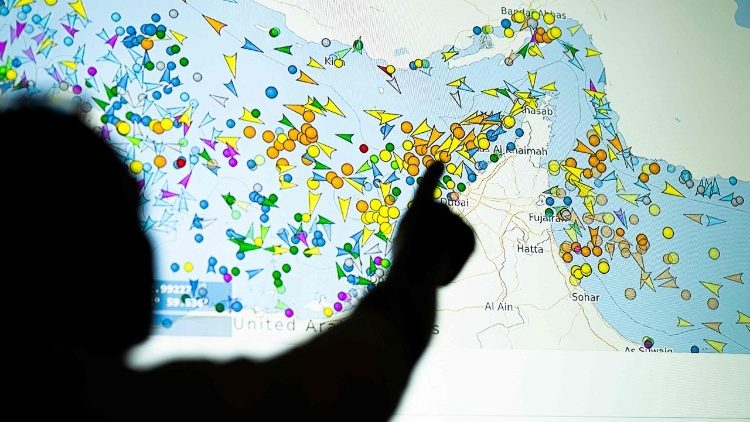
Tense situation in Strait of Hormuz
By Nathan Morley
The U.S. military on Monday began escorting stranded cargo ships through the Strait of Hormuz under President Donald Trump’s new initiative, “Project Freedom,” as fresh attacks heightened fears over the already‑volatile waterway.
Media reports suggest Iran continues to assert control over the strait and on Monday launched missiles and drones at military and commercial vessels.
Meanwhile, UN maritime agencies urged ships to exercise “maximum caution” as traffic through the narrow channel — which carries roughly 20% of global energy shipments — remains severely disrupted.
About 20,000 seafarers are still stuck aboard some 2,000 vessels, according to international shipping groups.
The International Maritime Organization said it is working to verify a string of recent attacks and warnings issued to commercial operators.
The UK Navy’s maritime safety portal reported that a tanker was hit by unidentified projectiles north of Fujairah in the United Arab Emirates on Monday.
That followed an attack a day earlier on a bulk carrier by several small craft near Iran.
Other ships have been ordered by radio to leave their anchorages, reflecting what maritime authorities describe as a rapidly shifting security environment.
Since late February, at least 41 incidents involving vessels in the Arabian Gulf, the Strait of Hormuz and the Gulf of Oman have been reported, according to regional monitoring centers.
Thank you for reading our article. You can keep up-to-date by subscribing to our daily newsletter. Just click here.