
EBU: Safeguarding Radio, a bastion of freedom and pluralism
Vatican News
Even today, despite the technological revolution brought about by Artificial Intelligence, radio remains the medium most trusted by European citizens as a source of information. It is a value that stands as a guardian of freedom, serving pluralism and the democratic system. This is the view expressed by Alessandro Gisotti, Deputy Director of Vatican Media and Vatican Radio’s representative to the European Broadcasting Union, where he also serves as President of the Radio and Audio News Group. Speaking to Luca Collodi, during the Vatican Radio program “Sound Magazine”, Gisotti reflects on the ongoing European debate surrounding the “Digital Networks Act” (DNA) — the new overarching telecommunications regulation for the continent. A key priority for the EBU, he explains, is ensuring that radio broadcasters remain fully accessible, starting with automobiles.
The “Digital Networks Act” is currently being debated at the European level — a regulation that will reshape the continent’s digital communications landscape for years to come. Why does it matter so much for our future?
The “Digital Networks Act” (DNA) is a legislative proposal by the European Union that aims to redefine digital communications across the continent, taking into account the extraordinary technological innovations of recent years, beginning with AI. The goal is to establish a unified regulatory framework — currently, the field is governed by a patchwork of different rules and directives — that is as up to date as possible. It matters because it concerns not only digital infrastructure, connectivity, and broadband networks, but will also have an impact on the news content that European citizens will be able to read, watch, and listen to in the years ahead. When we think about it carefully, this is fundamentally a question that touches the health of our democratic systems as well. The DNA is expected to be adopted in 2027. In the coming months, a lengthy and complex discussion is unfolding within European institutions — particularly the Commission, Parliament, and the Council of the EU. This is a highly significant phase, as the debate involves not only national governments and parliaments, but also media outlets — especially public service broadcasters, telecommunications operators, and, of course, the major tech companies of the digital world.
One of the key issues under discussion is the continued presence of radio in automobiles. What is the European Broadcasting Union — of which Vatican Radio is a founding member — calling for in this regard?
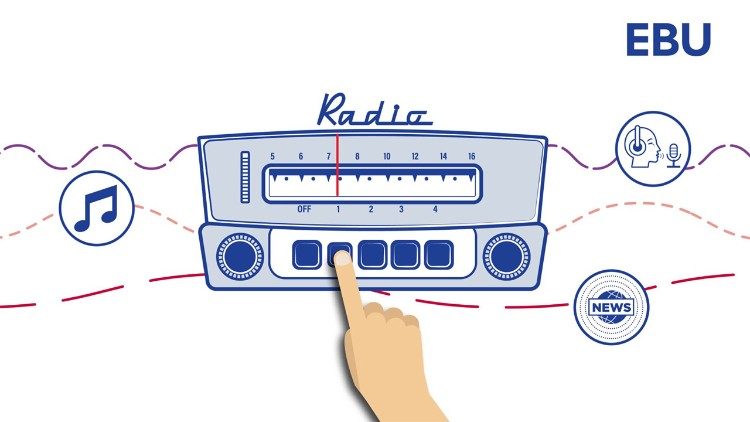
Exactly. One of the central points of the current debate concerns precisely the presence of radio in cars. In April, during the Radio Assembly of Europe in Sofia — which I attended on behalf of Vatican Radio — we agreed that as the EBU we must firmly advocate for the “Digital Networks Act” to mandate that automobile manufacturers maintain integrated terrestrial radio receivers in all new cars sold in the European Union. To this end, at both the national and European levels, public radio broadcasters are working to raise awareness among institutions, business leaders, and civil society in support of the initiative, known as “Radio Ready”.
What radio technologies should be guaranteed in automobiles, according to the EBU?
According to the EBU’s proposed amendment to the text currently under discussion, cars should be capable of receiving both analogue and digital terrestrial radio. This means ensuring the availability of FM and DAB/DAB+ technologies. Drawing also on my experience as President of the Radio and Audio News Group of Europe, I can say that European countries currently employ a range of distribution strategies: some still make extensive use of FM, while others are increasingly shifting toward DAB+. For this reason, European regulation should account for this diversity, ensuring technological inclusivity and guaranteeing that all users can listen to the radio in their cars, regardless of which country they are in.
But why do Europe’s public radio broadcasters consider the presence of radio receivers in cars so critical?
Cars are the place where the radio is most frequently listened to. According to the latest findings, nearly 60 percent of radio listening – in Europe – now takes place while people are travelling by car. Many people tune in to news programmes, shows, music, and traffic updates during their daily commutes or longer journeys. The EBU therefore points out that, without a guarantee of radio availability in vehicles, millions of European citizens could lose an important tool for accessing reliable, public-interest information. Nor should we underestimate the fact that in-car radio contributes to road safety, as it allows drivers to stay informed without the distractions associated with smartphone use. Sadly, every year a significant number of accidents — many of them serious — are caused by the use of mobile phones while driving.
Can we say that radio, despite the rapid and profound changes sweeping the information landscape, remains crucial and indispensable — even for the resilience of democratic systems?
Absolutely! Among Europe’s public service media, there is a firm awareness that radio is an essential service — a true bastion of freedom, benefiting democratic systems and the freedom of information. Radio remains a universal medium because it is free and therefore accessible to everyone. Radio also works in emergency situations — think of Ukraine, torn apart by war, or last year’s power blackout across the Iberian Peninsula. Moreover, all European-level surveys confirm that radio is the medium European citizens trust most. That is precisely why radio must be protected: it is a bulwark of informational pluralism. For all these reasons, the European “Digital Networks Act” must guarantee adequate space for radio broadcasters. Radio is a precious asset, and it must be safeguarded.
Thank you for reading our article. You can keep up-to-date by subscribing to our daily newsletter. Just click here.